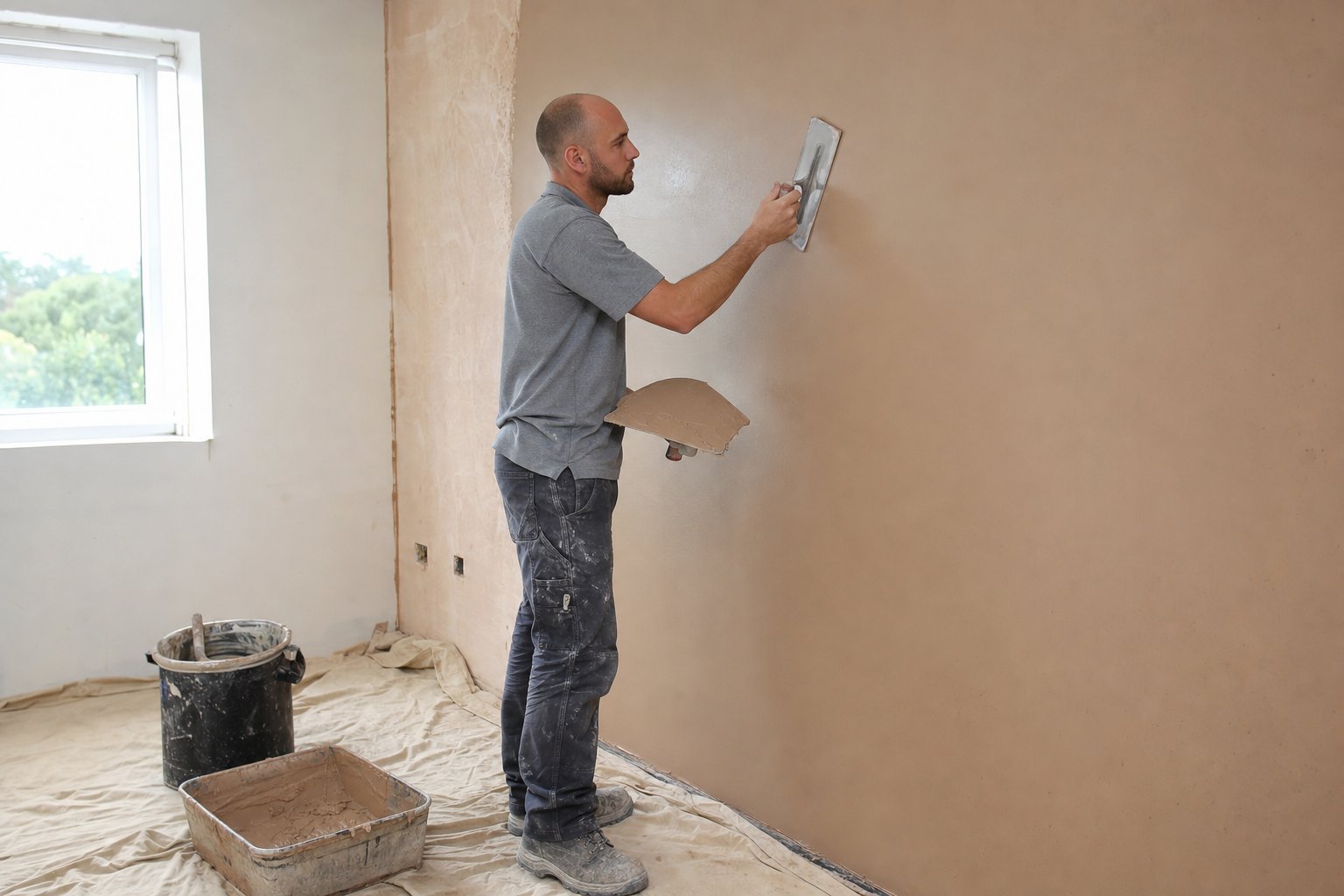
A reliable finish starts before the trowel hits the wall. For experienced plasterers mentoring apprentices, mix consistency is one of the easiest habits to teach badly and one of the most valuable to get right.
Start with the Background, Not the Bucket
Before mixing, check suction, cleanliness and temperature. High-suction backgrounds can pull moisture too quickly, leaving the apprentice chasing a stiffening coat. Low-suction or sealed surfaces can leave the plaster hanging wet and unpredictable.
Control the background with the right primer, bonding agent or damping-down method for the surface. Keep water clean, buckets spotless and tools free from old set material. A handful of dead plaster in the tub can shorten working time and confuse the lesson.
Reading the Mix
A good skim mix should feel creamy, workable and consistent from first load to final pass. If it is too loose, it may slump, drag and delay flattening. Too stiff, and it can tear, flash set or leave apprentices overworking the surface.
Teach apprentices to add plaster to water steadily, let it soak briefly, then mix thoroughly without whipping in unnecessary air. Avoid “rescuing” poor mixes repeatedly with extra water or powder. It may look usable, but it often sets unevenly.
Application and Finishing Cues
On the wall, consistency shows itself quickly. If the gear is pulling, tearing or setting in patches, look first at the background, bucket contamination, water ratio and room conditions before blaming the trowel technique.
Encourage apprentices to notice timing: first coat coverage, flattening window, second coat behaviour and final trowel response. Predictable plaster gives predictable stages. That rhythm is what builds confidence.
Safety and Aftercare
Use clean water, PPE, eye protection and dust control when opening and mixing bags. Keep walkways clear of wet plaster and trailing leads.
After finishing, avoid forced drying. Gentle ventilation is best. Rapid heat can affect the set, highlight background issues and increase cracking risk.
Summary
Consistent mixes come from controlled backgrounds, clean kit, correct ratios and good timing. For mentors, the real skill is teaching apprentices to diagnose what the plaster is telling them.
CTA: Build mix checks into every job briefing and make consistency part of the craft, not an afterthought.