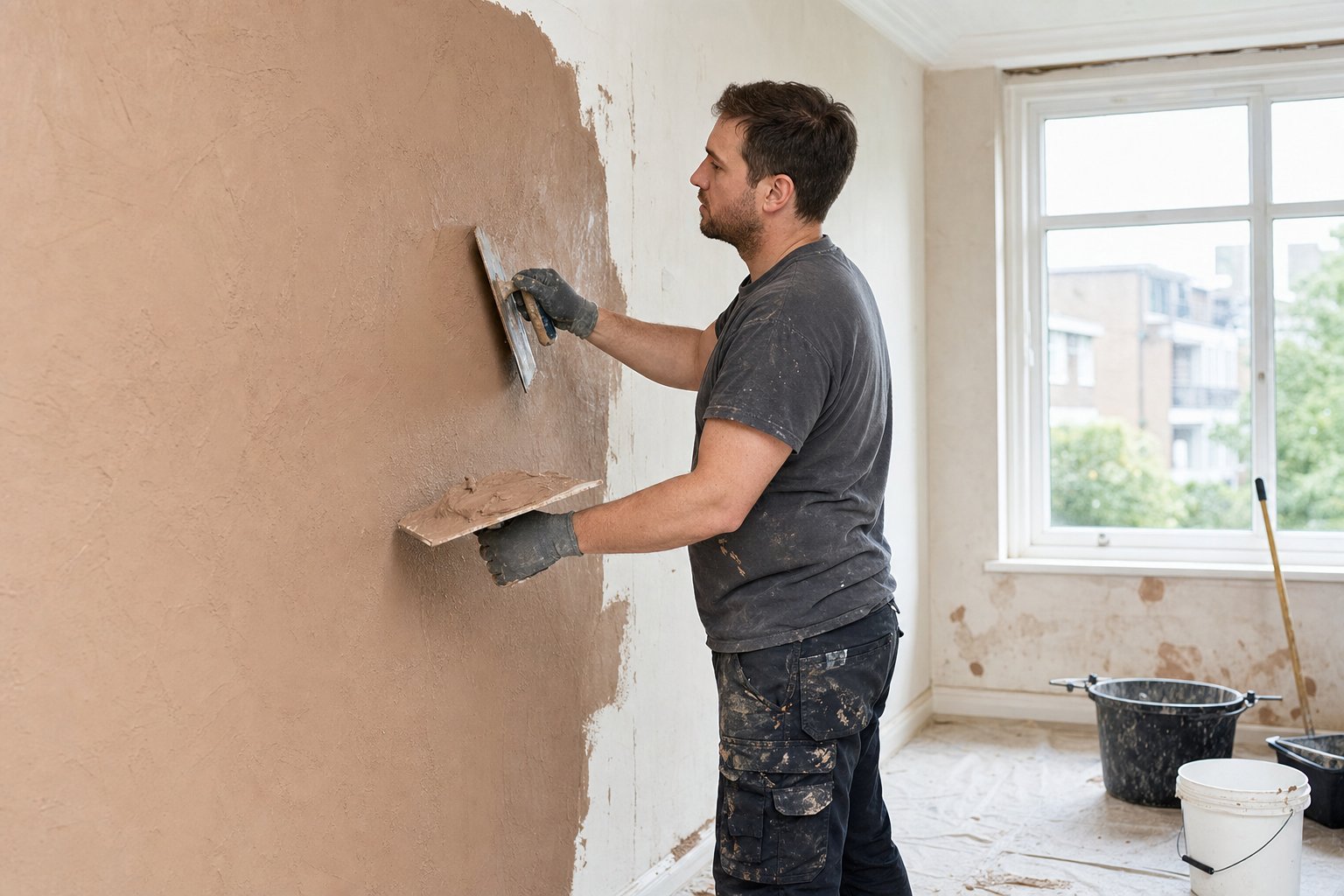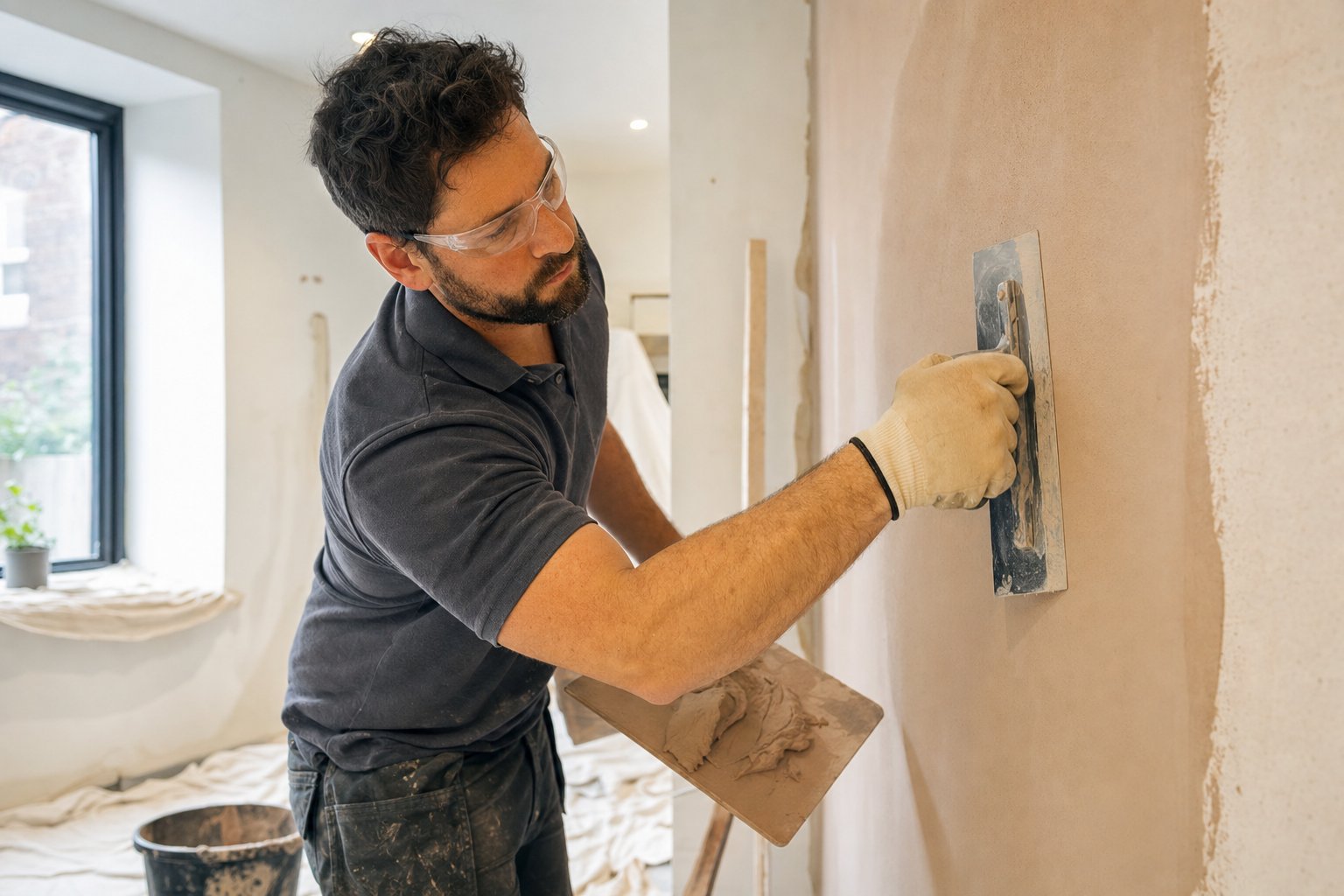
A predictable set and clean finish often start in the bucket. For site supervisors, small variations in finish plaster mix consistency can show up later as dragging, tearing, delayed trowelling or patchy surfaces.
Read the Mix Before It Reaches the Wall
Finish plaster should be workable, creamy and stable enough to sit on the hawk without slumping. If it feels loose, grainy or sticky too early, stop and check the basics before more material is applied.
Common warning signs include a mix that drops off the trowel, pulls under pressure, or stiffens before the first flatten. These issues can come from dirty buckets, inconsistent water measuring, over-mixing, old material, or mixing fresh plaster into a bucket with setting residue.
Supervisors should look for repeatability across gangs. The aim is not just a “nice mix”, but the same mix every time, especially on larger areas where timing between first coat, second coat and final trowel matters.
Practical Site Checks for Predictable Set
Use clean water, clean buckets and clean mixing paddles for every batch. Even small traces of setting plaster can accelerate a fresh mix and reduce working time.
A simple quality-control check should cover:
- Bag condition, date and storage before use
- Consistent water quantity for each full or part bag
- Plaster added to water, not water chased into dry powder
- Mixing time kept steady between batches
- No re-tempering once the set has started
- Background suction controlled before finish plastering begins
If one room is finishing faster than another, compare the batch process before blaming the product. Temperature, airflow and suction all matter, but inconsistent mixing is often the easiest variable to remove.
Troubleshooting During Finishing
If the plaster is dragging on the first trowel, it may be too stiff, overworked, or setting ahead of the team. If it remains wet and greasy for too long, the mix may be too loose, the background too sealed, or site conditions too cold.
For supervisors, the key is timing. Check whether the plaster firms evenly between flattening, second trowel and final polish. A good finish coat should tighten predictably, allowing the team to close in the surface without excessive water.
Safety Reminders for Finish Plaster Mixing
Wear eye protection when opening bags and mixing. Use gloves where needed, as wet plaster can irritate skin. Keep mixing areas tidy to reduce slip risks from splashes and spillages, and avoid trailing leads near wet work.
Dust control matters too. Tip bags carefully, mix at low speed to start, and keep ventilation appropriate without creating strong draughts across fresh finish plaster.