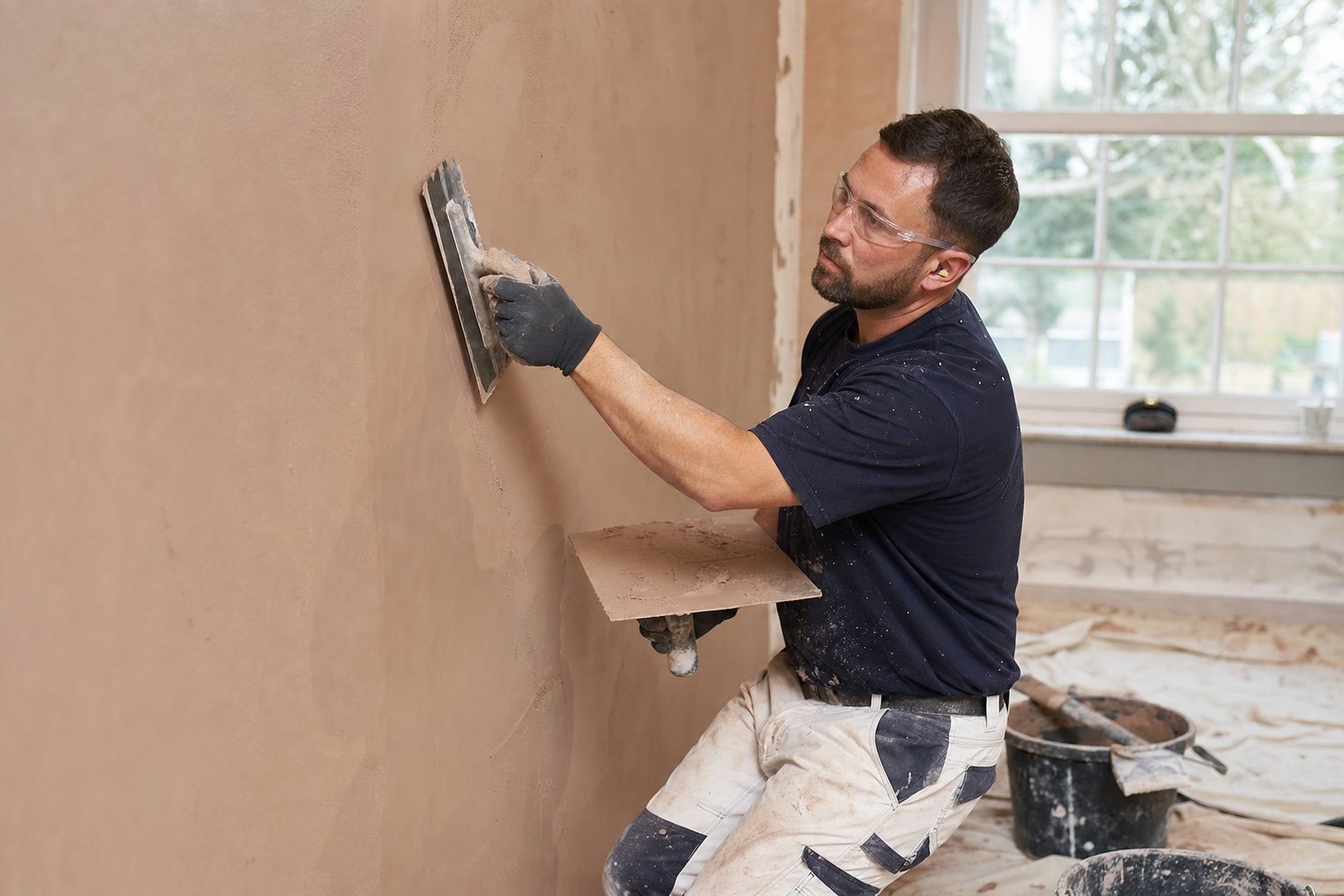
A good skim starts before the first mix. For newly qualified plasterers, a safe workflow keeps the job moving, protects your health, and leaves the room ready for aftercare without unnecessary mess or risk.
Set Up the Room Safely
Begin with a quick risk assessment. Check access, lighting, trip hazards, ventilation, electrical points, ceiling height, and where materials will be mixed. Keep walkways clear and tape down any protection that may ruck up underfoot.
Wear suitable PPE: safety boots, gloves, eye protection when mixing, and respiratory protection if dust is present. If you are sanding old surfaces, chasing loose backgrounds, or handling dry powdered materials, control dust at source and avoid sweeping dry debris. Use extraction or damp methods where practical.
Store bags of plaster close to the mixing area but out of walkways. Lift correctly, share heavier loads, and avoid twisting while carrying. If working on ceilings or high walls, use a properly set platform or hop-up, not buckets or makeshift steps.
Mix and Apply With Control
Before mixing, check the product safety data sheet and follow COSHH guidance. Add plaster to clean water, not the other way round, and keep your face away from airborne powder. Mix in a stable bucket at a comfortable height to reduce strain.
During application, work methodically so you are not rushing across wet floors or stepping over tools. Keep leads, hoses, and buckets positioned to one side. Clean dropped plaster promptly, especially near doorways and access routes.
Safety note: wet plaster can irritate skin. Wash splashes off promptly and do not continue working in contaminated gloves.
Finish Without Creating New Hazards
As the set tightens, keep tools organised and avoid overreaching. Move your platform rather than stretching beyond a safe stance. Good lighting helps you spot trowel marks without leaning awkwardly or standing too close to fresh work.
Limit unnecessary water on the floor during final trowels. A damp sponge and controlled tool cleaning are safer than flooding skirting lines or sockets. Keep electrical accessories protected and never allow wet plaster or wash water into live fittings.
Clean-Down and Aftercare
Clean tools in a suitable wash-out area, not household sinks or surface drains. Bag waste and dispose of it responsibly. Do not dry-sweep plaster dust; vacuum with appropriate filtration or use damp clean-up methods.
Before leaving, remove trip hazards, label any wet areas if others are on site, and advise on ventilation and drying. Make clear that heaters should not be blasted at fresh plaster, as rapid drying can affect the finish and may create uncomfortable working conditions for following trades.