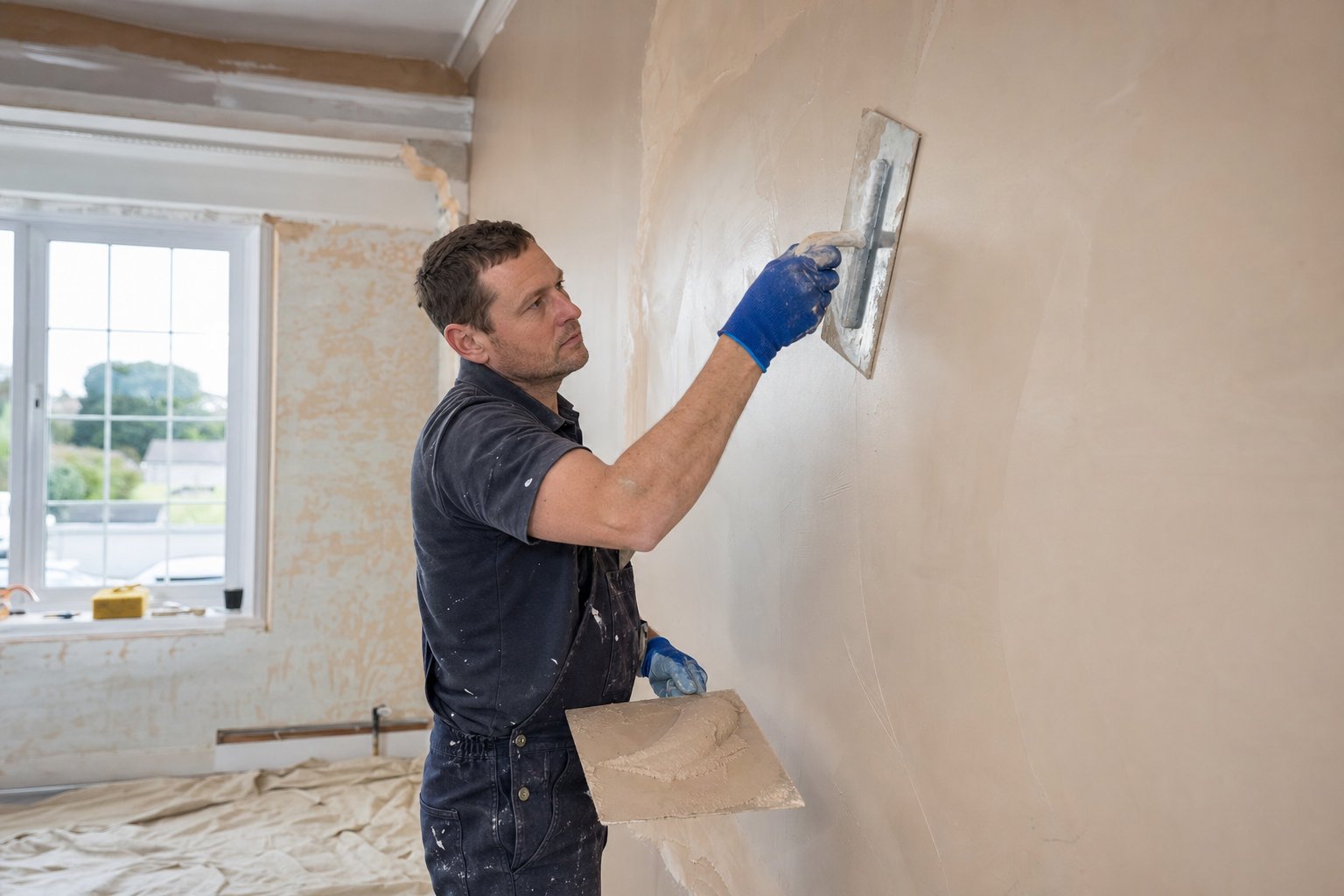
Good rendering starts before the first pass goes on the wall. For small independent plastering firms, poor substrate preparation can lead to cracking, staining, weak adhesion and costly call-backs across sand and cement, monocouche, silicone, acrylic and lime systems.
Mistake 1: Rendering Over Dirt, Dust or Contamination
A wall can look sound but still carry algae, laitance, friable paint, salts or greasy deposits. These reduce bond and can cause hollow patches or early failure, especially with thin-coat silicone and acrylic systems.
On site, check that the background is clean, stable and free from loose material. Brush down masonry, remove blown coatings, treat organic growth properly and rinse where required. Allow the substrate to dry to the level recommended by the render manufacturer before priming or applying basecoat.
Safety reminder: when cleaning elevations, control runoff, wear eye protection and gloves, and use safe access rather than overreaching from ladders.
Mistake 2: Ignoring Suction and Moisture Levels
High-suction blockwork can pull moisture from sand and cement or monocouche too quickly, leading to poor curing and cracking. Low-suction or damp backgrounds can delay set and weaken adhesion.
Before application, test suction by lightly wetting the wall and watching how quickly water is absorbed. Use the correct primer, stabiliser or suction control coat for the system. Do not assume one primer suits all renders; lime, monocouche and thin-coat systems often have different preparation requirements.
Site check: confirm substrate type, moisture condition, suction rate, primer specification and drying time before mixing material.
Mistake 3: Skipping Repairs, Beads and Movement Details
Rendering over cracked masonry, open joints or failed previous render simply hides problems for a short time. Movement cracks will often return through new finishes, particularly on exposed elevations.
Rake out and repair defective joints, remove hollow render, and reinstate backgrounds before basecoating. Fit beads straight, secure and plumb. Respect movement joints rather than bridging them with mesh or finish coat. Around windows, doors and changes in substrate, use the reinforcement details specified for the system.
Safety reminder: when cutting out old render or chasing joints, use dust extraction or suitable respiratory protection, particularly on older buildings.
Mistake 4: Treating Every Render System the Same
Sand and cement, monocouche, silicone, acrylic and lime renders all behave differently. A preparation method that works for dense blockwork and traditional render may not suit a breathable lime system or a proprietary coloured through-render.
Keep a simple pre-start checklist in the van: substrate soundness, contamination, suction, damp, repairs, mesh zones, beads, movement joints, primer and weather forecast. Check manufacturer guidance before changing backgrounds or materials. Good prep is not extra work; it is the part of the render system that protects the finish.