A good skim finish starts before the first mix. For site supervisors, quality control depends on sequencing, communication, substrate checks and clean handovers as much as trowel skill.
Pre-Start Checks and Site Organisation
Before skimming begins, confirm the area is ready against the drawings, specification and programme. Check that boards, beads, stop ends and movement joints are correctly fixed, and that services, sockets and openings match the latest layout. Skimming over incomplete or incorrect work creates rework for several trades.
Supervisors should confirm access, lighting, ventilation and water supply. Floors should be protected, finished joinery masked, and waste routes agreed. Materials must be suitable for the background and stored dry. A common mistake is allowing work to start on dusty, wet or contaminated surfaces. The corrective action is simple: stop, clean down, control suction where required, and only proceed when the background is fit to receive plaster.
Controlled Skimming Workflow
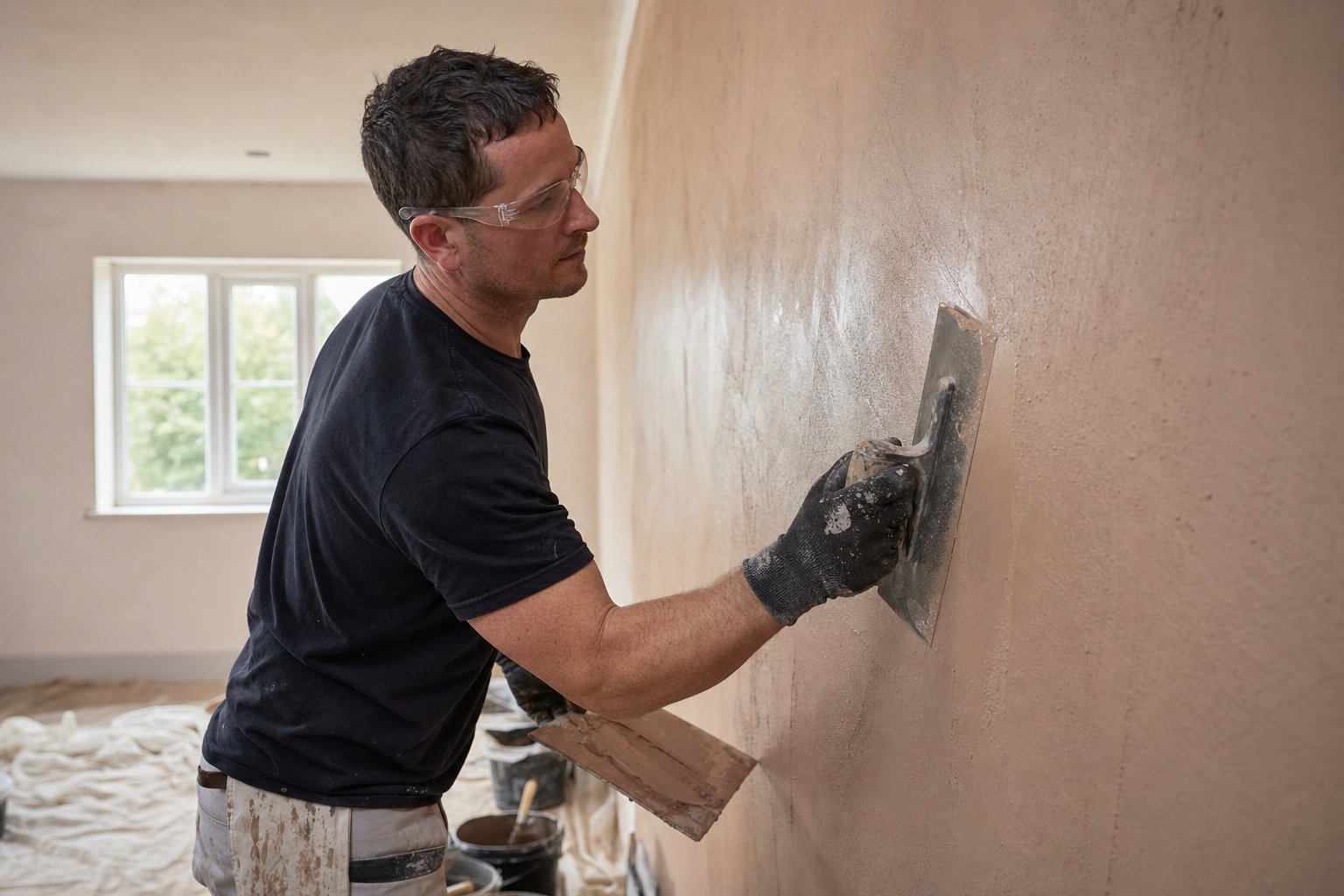
Work should follow a planned sequence: ceiling before walls, top down where practical, and rooms completed in logical bays. This helps maintain wet edges, protects finished work and reduces trade clashes.
Quality checks should include consistent thickness, full coverage to angles and beads, clean lines around frames, and no missed hollows behind reveals. Supervisors should also watch timing. Over-trowelling too early can drag material; leaving it too late can lead to tearing and poor flatness. The corrective action is to manage set times properly, adjust gang size to room size, and avoid spreading beyond what can be finished within the working window.
Quality Control During the Works
Inspection should happen while the plaster is workable, not only after it has set. Use good lighting across the surface, not just face-on, to identify ridges, waves and trowel marks. Check junctions with ceilings, partitions and abutments, as these are often where defects show.
Common mistakes include burying beads unevenly, losing arrises, and leaving fat edges around sockets. Corrective actions include reworking while live, cleaning details before set, and recording defects by plot, room and elevation so trends can be addressed with the team.
Safety Notes and Clean-Down
Skimming is low-risk only when housekeeping is controlled. Keep mixing areas tidy, manage trailing leads, use appropriate dust control when preparing surfaces, and ensure manual handling of bags follows site rules.
Clean-down is part of quality control. Remove splashes from frames, floors and fittings before they harden, clear waste, wash tools in agreed areas, and leave rooms ready for drying, inspection and the next trade.