A reliable plaster mix is not just a trowel skill; it is part of good site organisation. For newly qualified plasterers, understanding how background, timing, temperature and sequencing affect consistency helps deliver a predictable set and a clean finish.
Prep Starts Before the Bucket
Check the construction context before mixing. A new blockwork wall, a skim over plasterboard, or a patched refurbishment area will all manage suction differently. Read the job information, note board type, background condition and any specified finish, then plan your water, material and working time around the area size.
Use clean water, clean buckets and measured powder. Dirty tubs, old set plaster or guesswork can shorten working time and cause dragging. Keep bags dry and off the floor, especially on busy sites where storage, traffic routes and weather exposure can affect materials.
Getting the Mix Right on Site
For a predictable set, add plaster to water, not the other way round. Mix to a smooth, lump-free consistency that holds on the hawk without slumping but still spreads easily under the trowel.
If the mix stiffens too quickly, check for contaminated tools, warm backgrounds, high suction or over-mixing. If it stays too wet, look at cold conditions, low suction surfaces, excess water or poor ventilation. Do not “freshen up” setting plaster with extra water, as it weakens the finish and makes timing harder to control.
Application and Finishing Checks
Apply with the programme in mind. Coordinate with other trades so areas are clear, services are fixed, and boards or backgrounds are ready. A mix that feels right in the bucket can still fail if the wall is dusty, damp, frozen or poorly prepared.
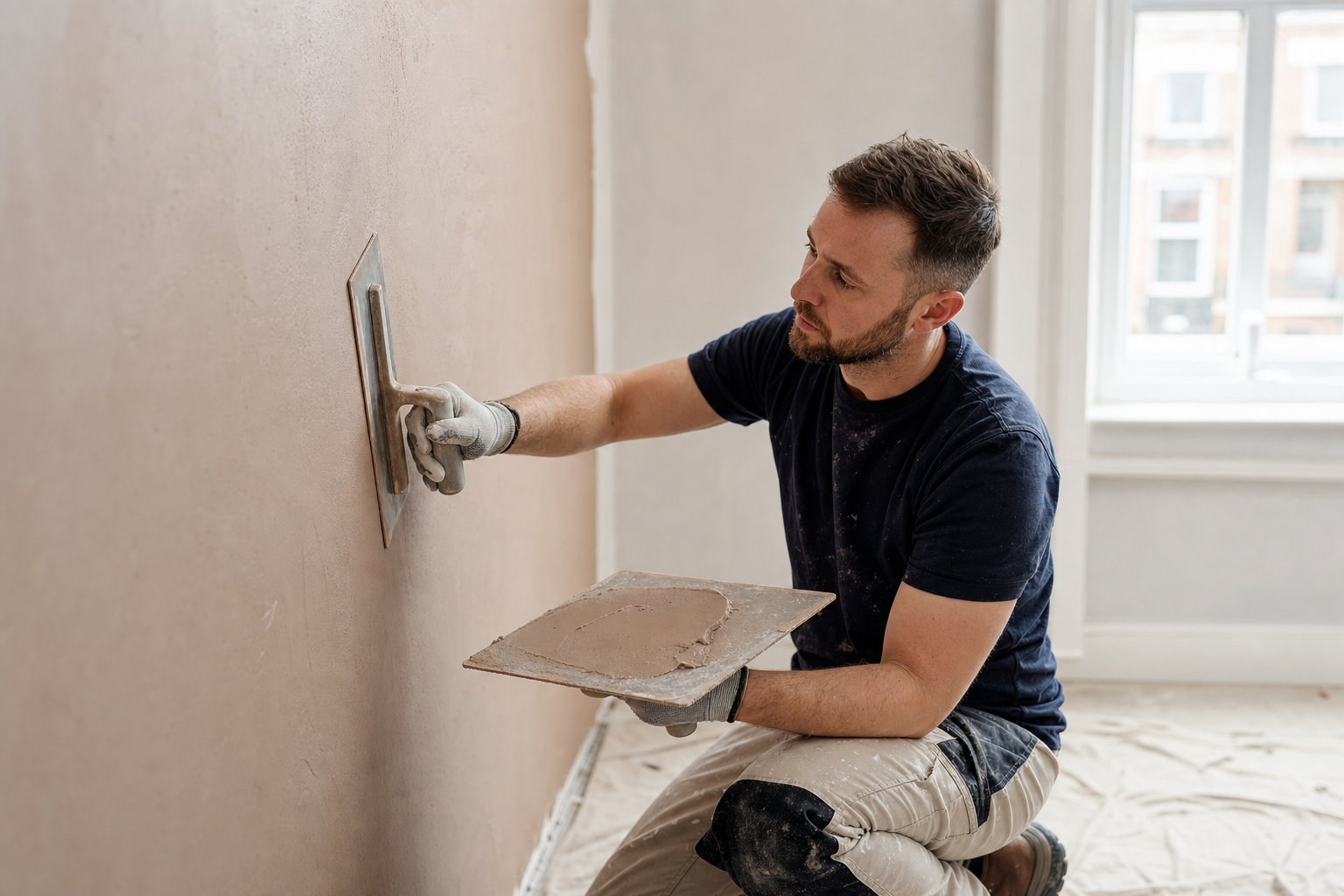
Watch the surface rather than the clock alone. Trowel timing should follow the set: flatten, close in, and finish as the plaster firms. If the surface tears, it may be too wet or overworked. If it drags, suction or a stiffening mix may be ahead of you.
Safety Notes and Aftercare
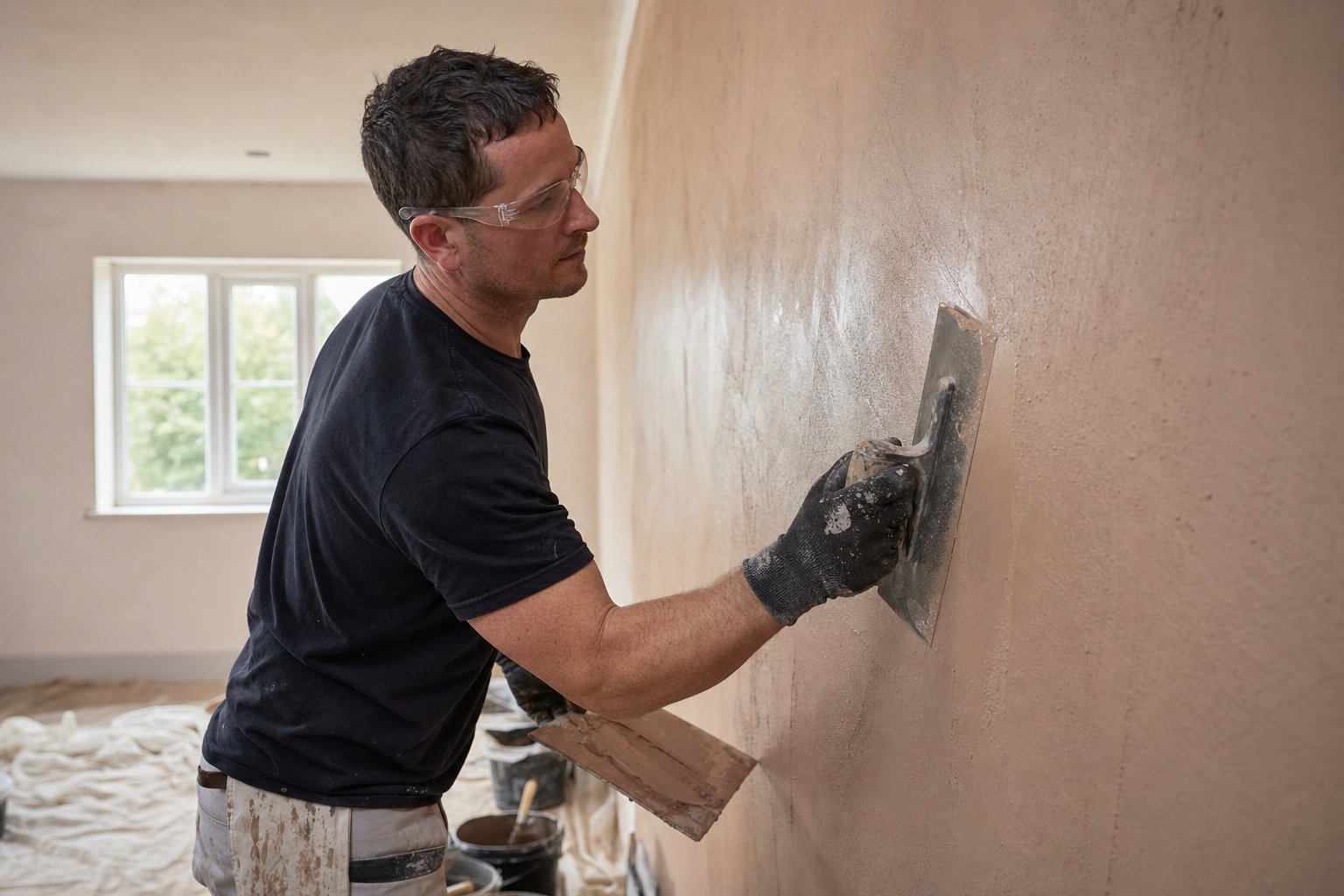
Wear eye protection when mixing, control dust, and follow manual handling guidance when moving bags. Keep walkways clear of buckets, leads and splashes.
After finishing, protect the work from impact, rapid drying and freezing. Maintain sensible ventilation, avoid forced heat, and leave the surface to dry evenly before decoration.