For newly qualified plasterers moving into floor screeding, beads and trims are not decorative extras. Used correctly, they help control levels, protect edges, form clean bays and reduce cracking in domestic and commercial floors.
Know What Each Trim Is Doing
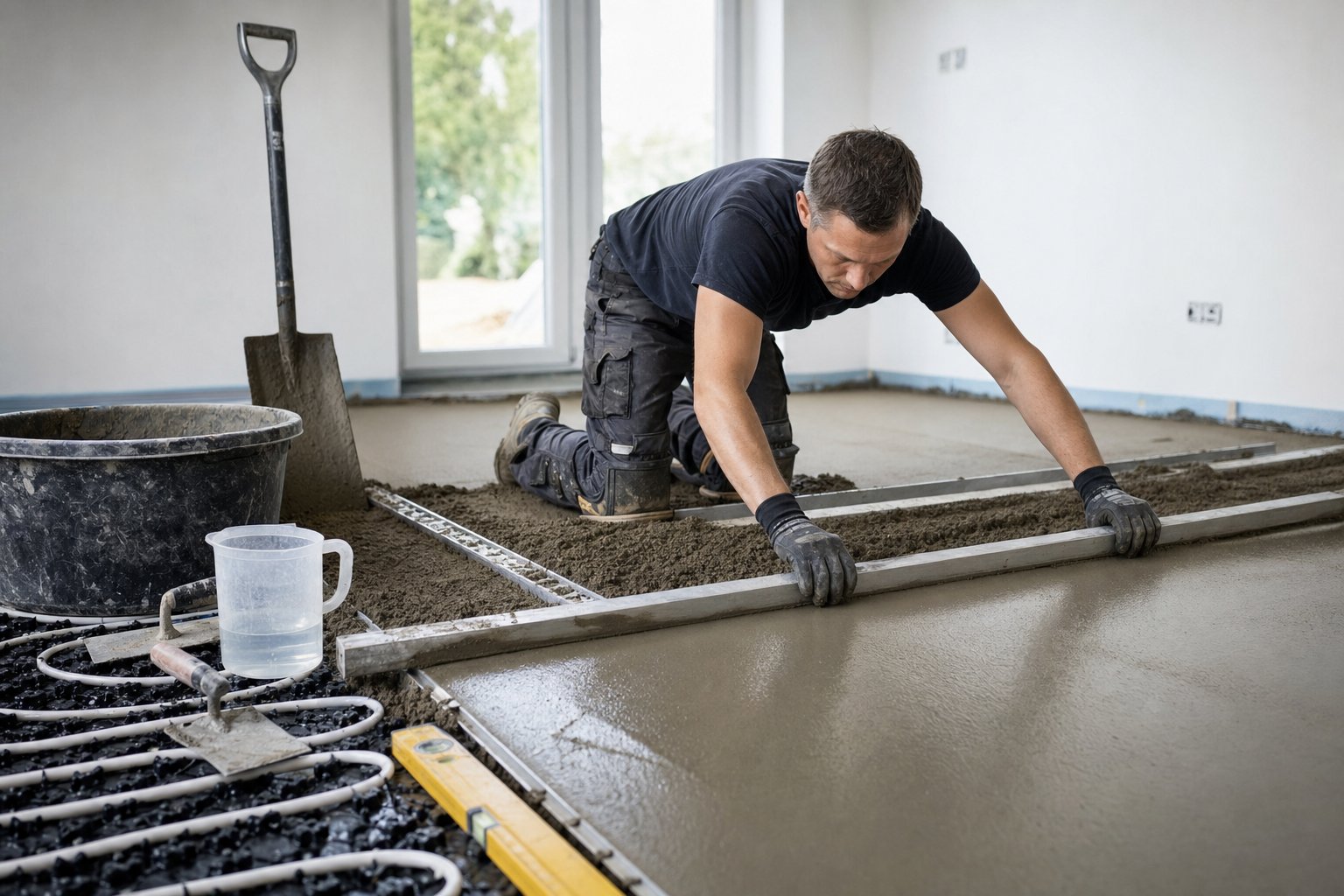
In floor screeding, the right trim depends on the screed system and the area being formed. Traditional sand and cement screeds often rely on temporary screed rails or fixed guides to control depth and level. Flowing screeds and self-levelling compounds may need perimeter edging, stop ends and movement-joint profiles to contain the material and allow controlled movement.
For door thresholds, steps, ramps and changes in floor finish, choose trims that suit the final covering depth. A trim that sits proud can telegraph through vinyl or LVT, while one set too low may leave a weak feather edge.
Setting Out for Straight Lines
Start with the datum. Mark finished floor level clearly around the room, allowing for insulation, underfloor heating pipes, membranes, screed depth and final floor finish. Check the manufacturer’s minimum cover over underfloor heating before fixing any guides or trims.
Fix stop beads, edge trims or rails straight and secure before mixing. Use a laser level, long straightedge and tape checks rather than judging by eye. On larger areas, divide the floor into manageable bays so each run can be ruled, dappled or levelled consistently without chasing material that has already started to tighten.
Durability Checkpoints on Site
Before pouring or laying, check that trims are clean, firmly fixed and compatible with the screed. Galvanised or plastic profiles are commonly used, but always consider moisture, laitance, primers and floor finish adhesives.
At perimeters, compressible edging strip should remain continuous, especially with floating screeds and underfloor heating. Do not bridge it with rigid trim or excess screed, as this can restrict movement and increase cracking risk. Around columns, doorways and pipe penetrations, form neat isolation details rather than packing in odd scraps.
Safety Notes for Screeding Work
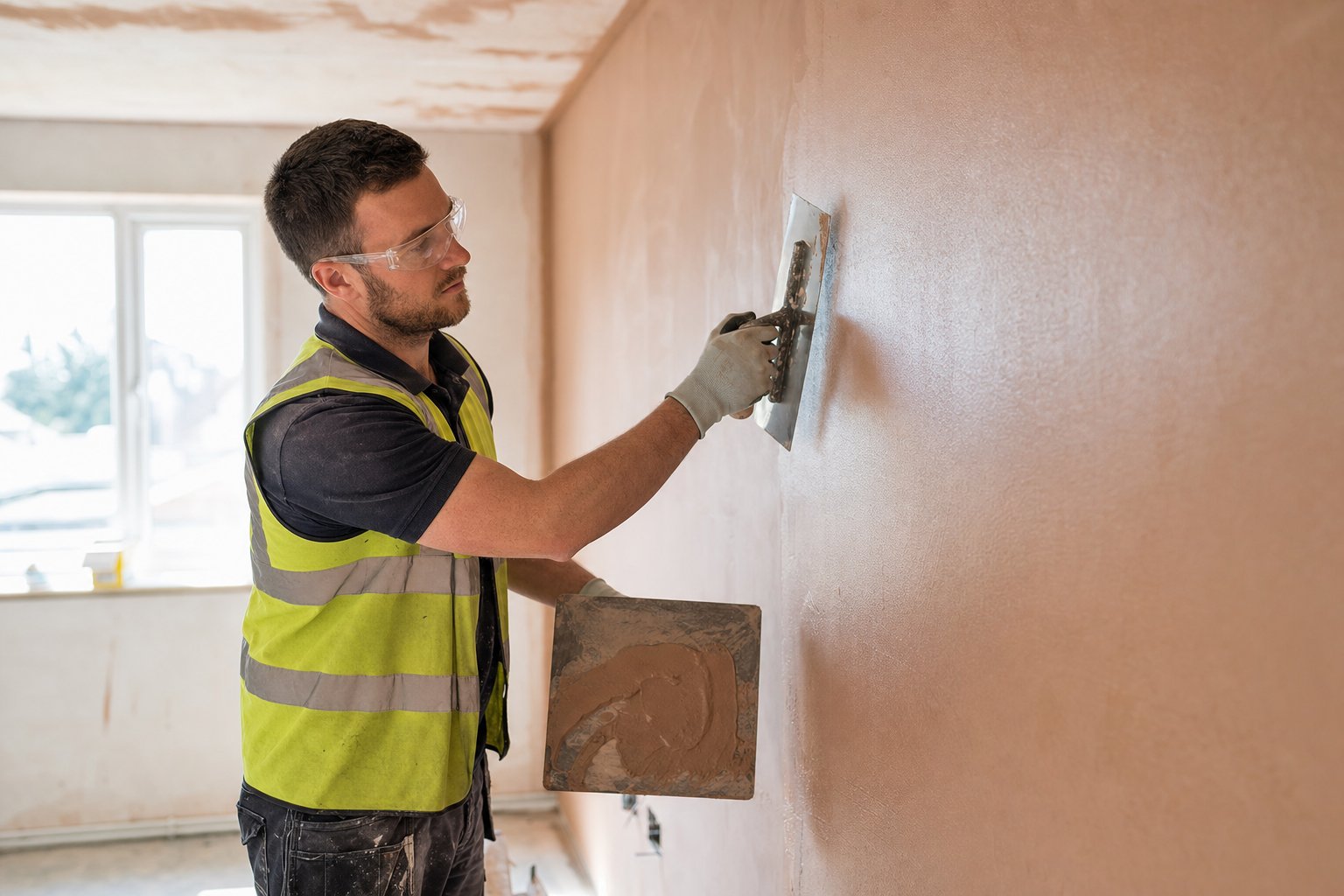
Cut trims with suitable hand tools or a guarded saw, and wear eye protection and gloves to avoid sharp edges. Keep walkways clear of loose profiles, offcuts and trip hazards, particularly when working with wet flowing screeds.
When using primers, self-levelling compounds or cement-based screeds, follow the safety data sheet. Wear appropriate PPE, protect skin from cement burns, and maintain ventilation where products require it. Straight lines are important, but safe setting out and clean working habits are what keep the job professional.