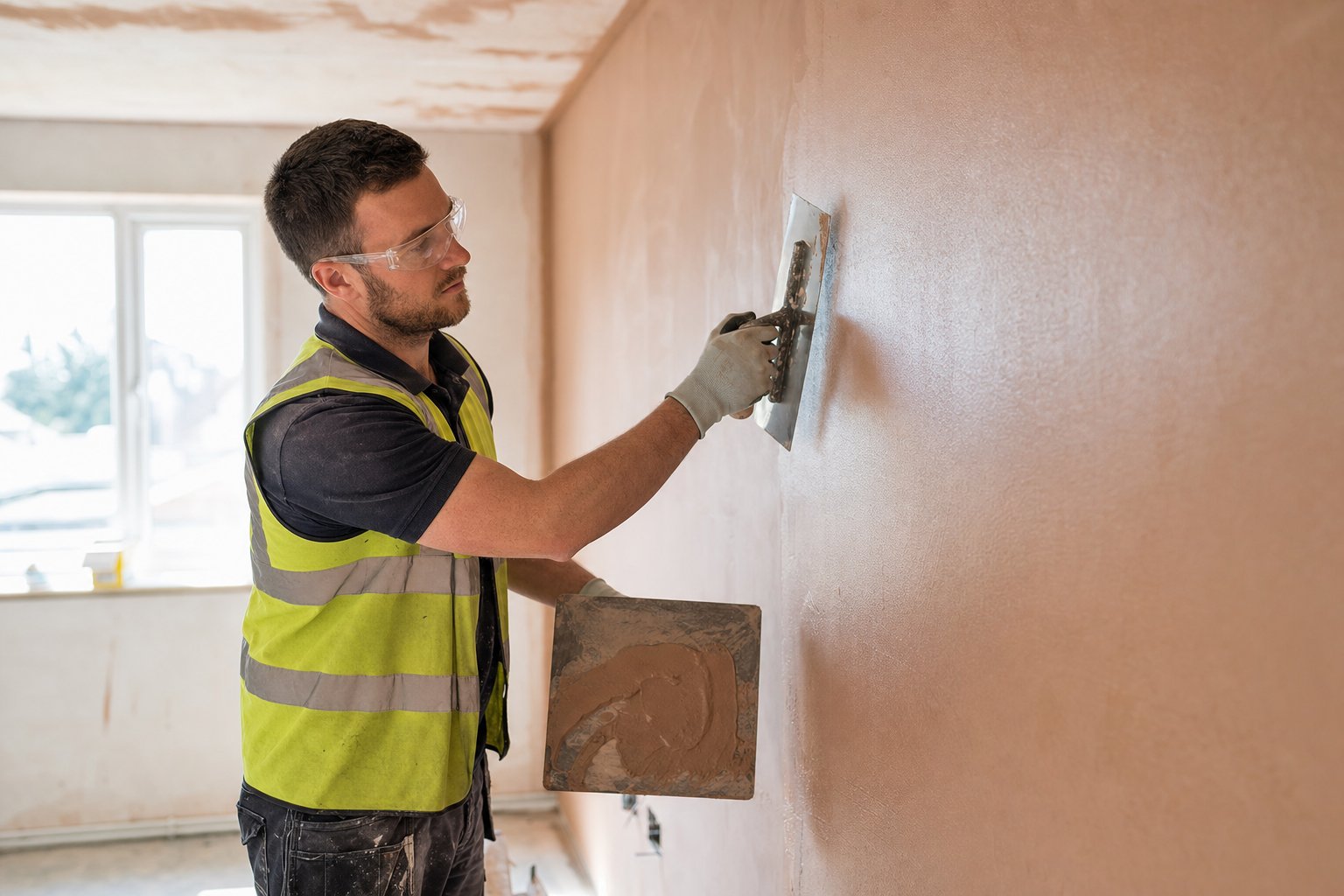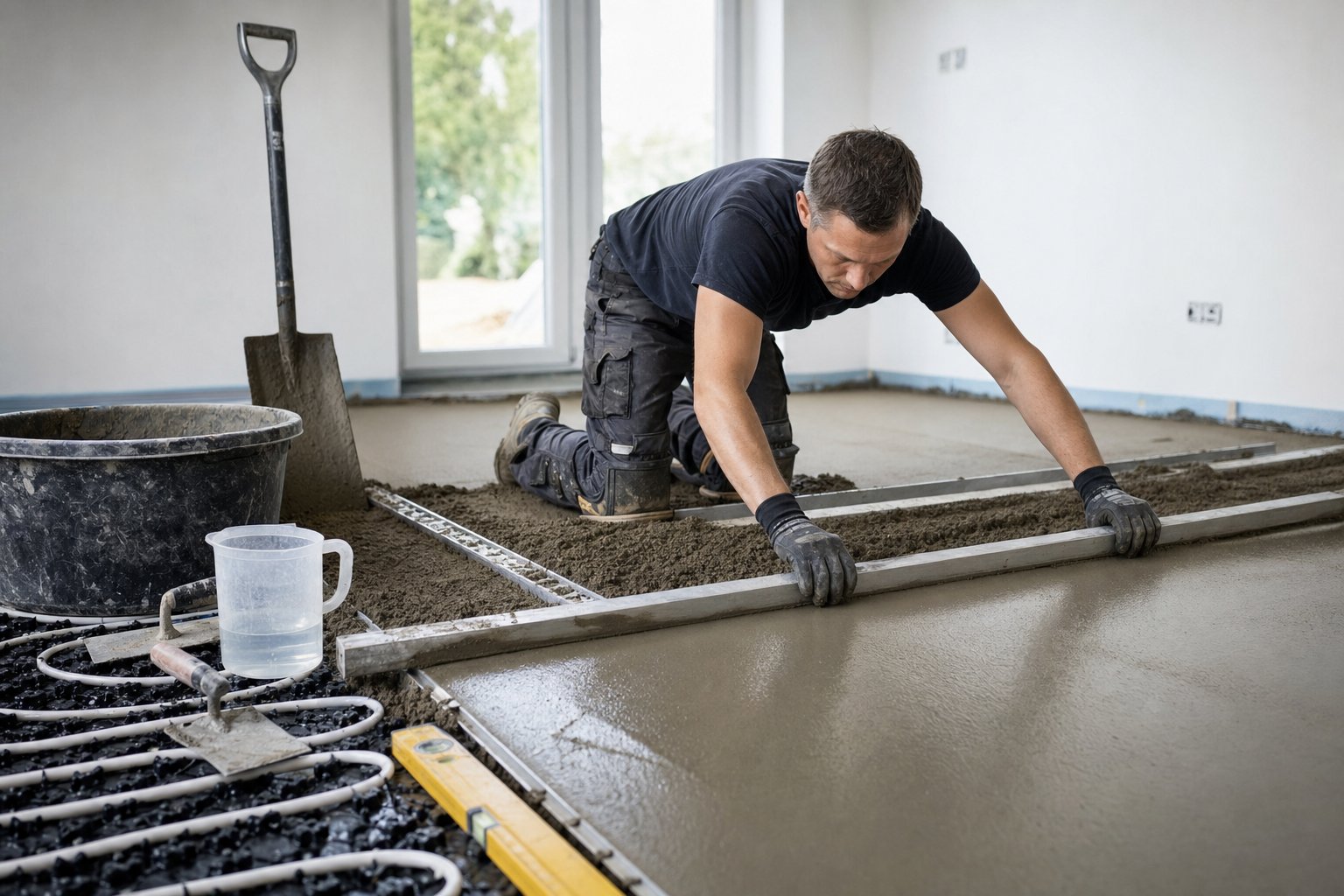
A reliable screed starts with a repeatable mix. For newly qualified plasterers, the aim is simple: consistent gauging, controlled water, clean preparation and the right finish for the specified screed system.
Start with the specification, not the shovel
Before mixing, confirm the screed type, thickness, finish, insulation build-up and any falls or underfloor heating requirements. Traditional sand and cement screeds are commonly gauged at 3:1 or 4:1 sharp screeding sand to OPC, mixed by volume for consistency .
Use clean, sharp, gritty screeding sand. If the sand is damp, allow for bulking; wet sand increases in volume and can accidentally weaken the gauge if ignored . Keep the water addition controlled. A traditional screed should be semi-dry, not slurry-like; too much water weakens the floor and increases shrinkage risk .
Reading the mix as you lay
If the screed drags, crumbles or will not close under the float, it is often too dry, poorly mixed, or has been left standing too long. Drying near sun, draughts or heating can also make finishing difficult; light dampening before floating or trowelling may help, but do not flood the surface .
If the mix pumps, slumps or leaves laitance, suspect excess water. Too much water makes it harder to form a flat, level surface and can leave a weak finish as the floor dries . Poor mixing can also leave pockets of sand or cement, so keep batch times and loading order consistent.
Checkpoints for levelling compounds and flowing screeds
Self-levelling compounds need a different consistency check. Mix with a whisk to a creamy consistency, then lay immediately at the specified thin depth, commonly 2–5 mm . If it stops flowing, check suction: the sub-floor should be clean and, where specified, dampened or primed with diluted PVA while still tacky to help control suction .
For free-flow liquid screeds, accuracy comes from the system: tripods set from the datum, correct pour height and gentle dappling to level and finish the material . Around underfloor heating, avoid ad-hoc water adjustments; follow the supplier’s data because flow, cover and curing are all part of the design.
Safety notes while troubleshooting
Wear gloves, knee pads and suitable workwear. Wet cement can cause chemical burns, and screeding involves prolonged kneeling, bending and reaching, so avoid overstretching and take breaks . When ruling in, work methodically from the screeds, finish as you go, and avoid walking on fresh material wherever possible .