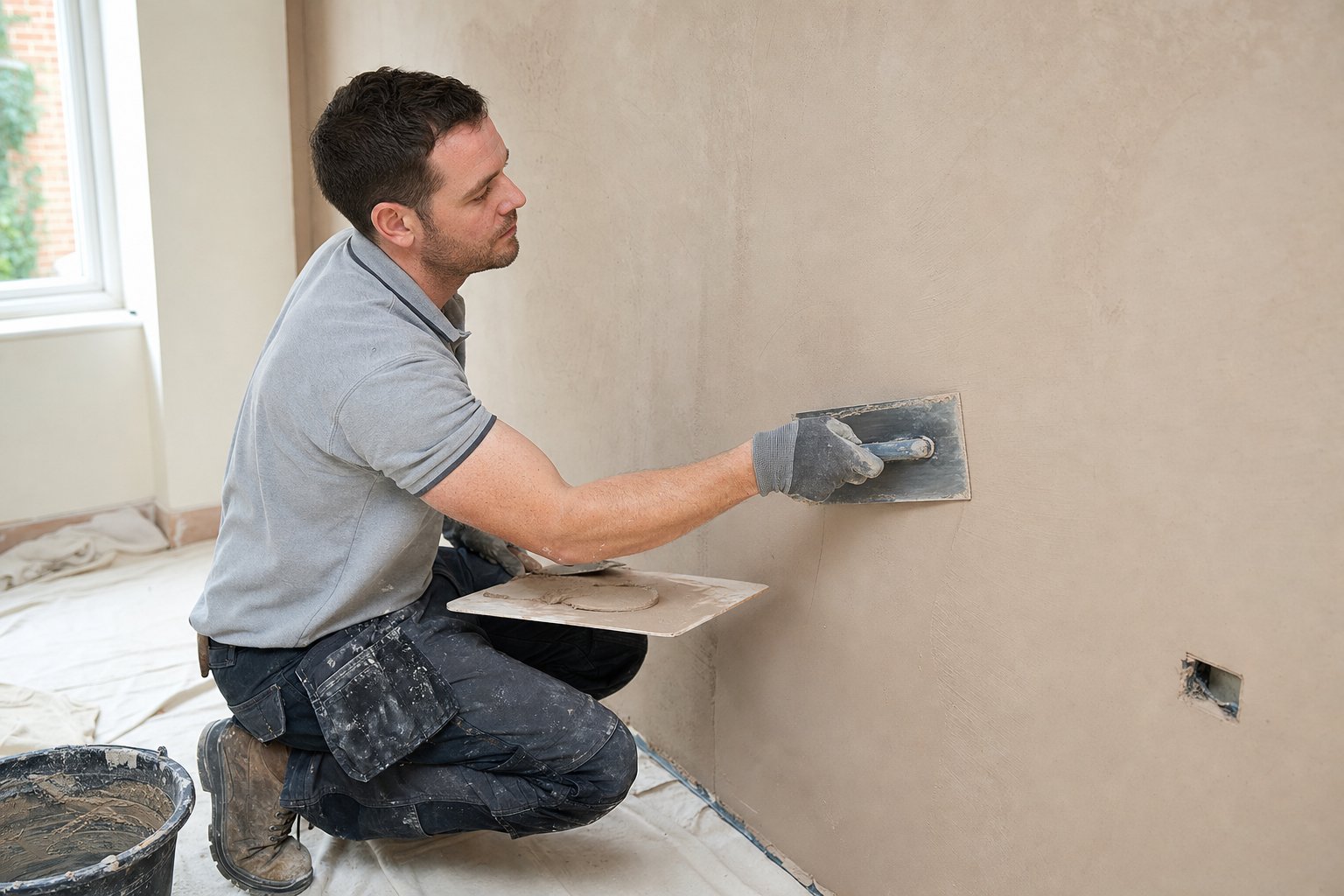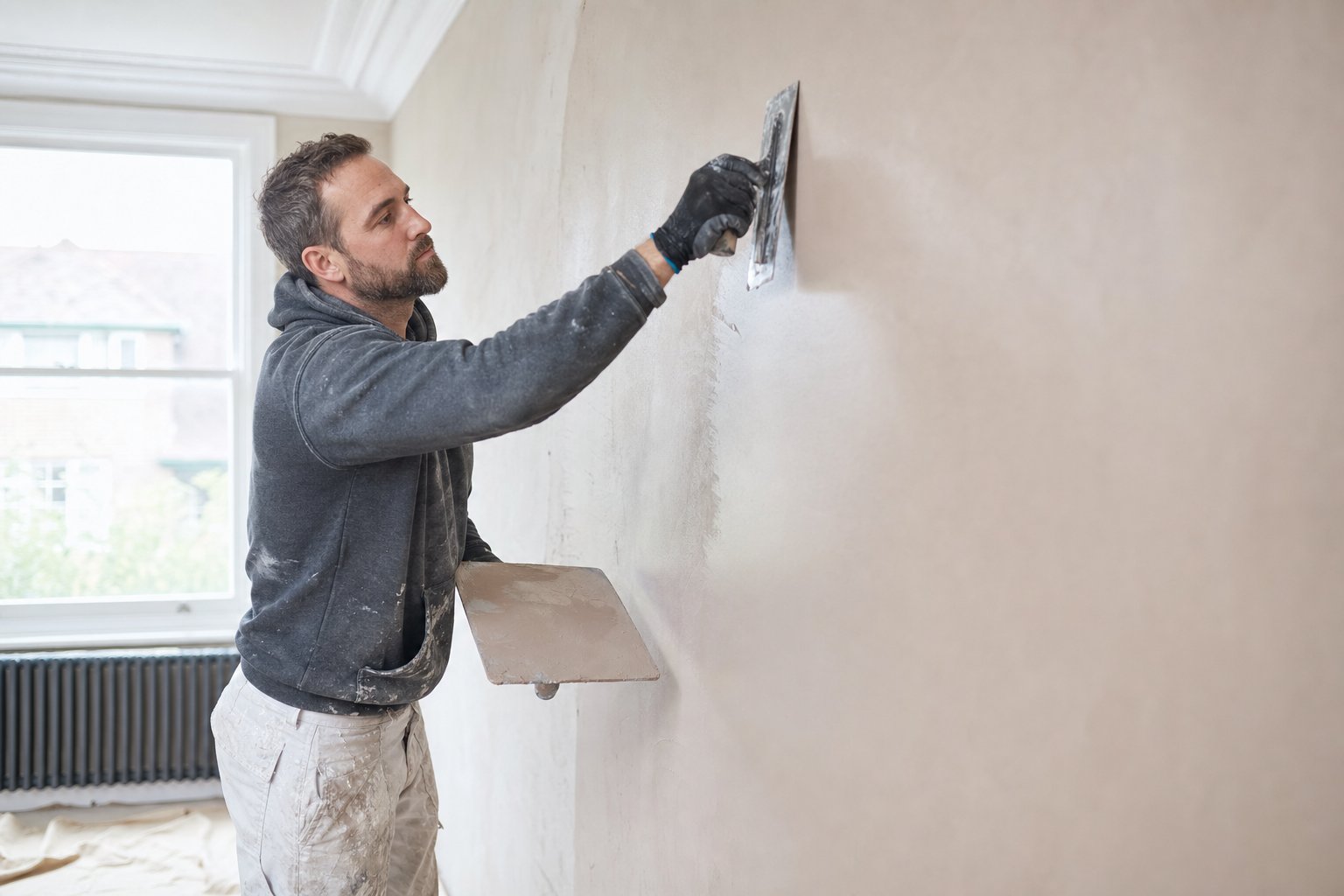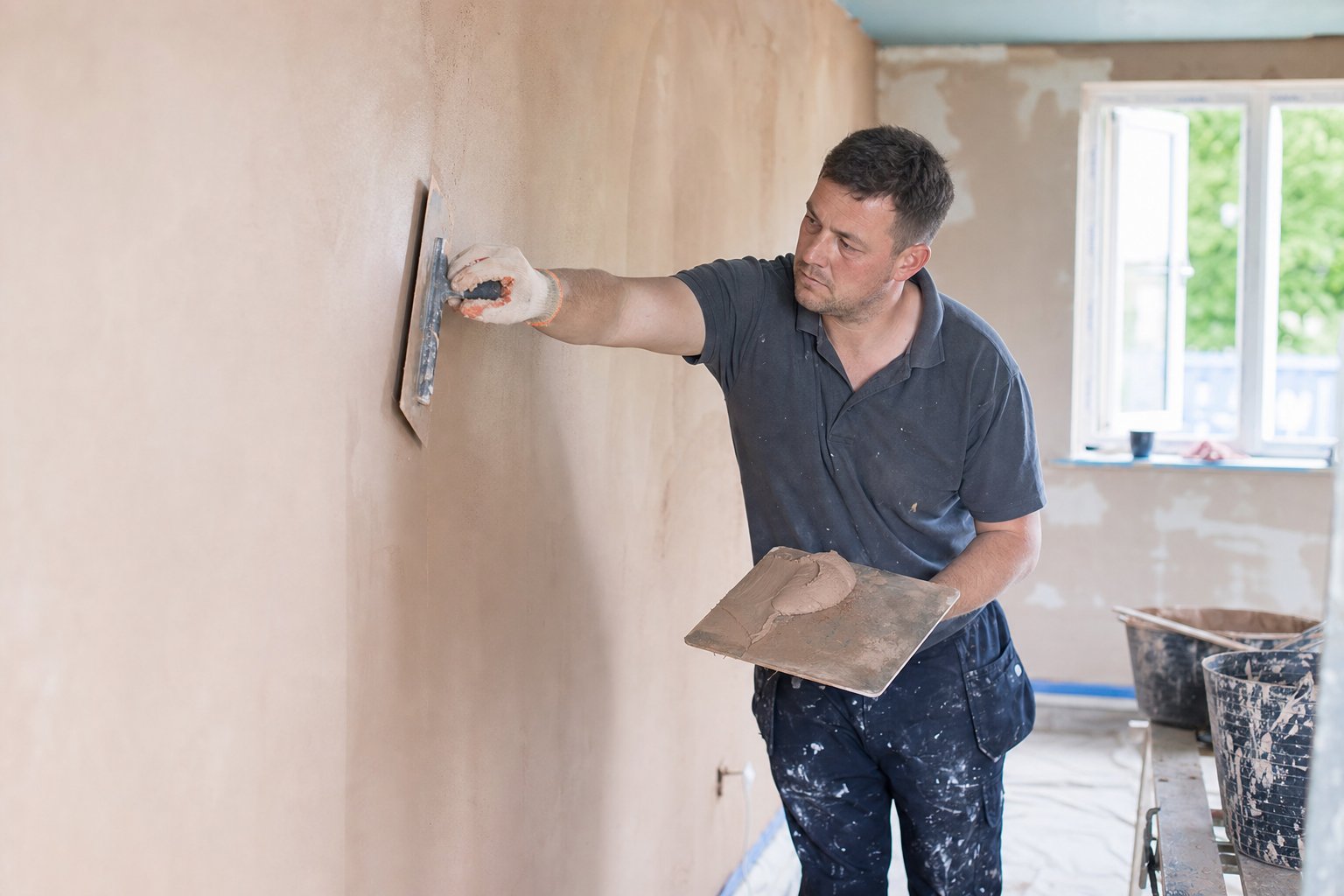
A level, well-prepared background is not just good site practice — it is a core skill often observed in apprenticeships, NVQ evidence, City & Guilds practical tasks and workplace assessments. For small independent plastering businesses, getting this stage right supports consistent finishes, fewer reworks and stronger professional progression.
Why Assessors Look Closely at Background Preparation
In training and qualification settings, the final skim is only part of the evidence. Assessors will often look for planning, surface checks, correct material choice and safe working methods before any finish coat is applied.
Uneven backgrounds can lead to hollows, thick-and-thin skim, poor suction control and visible defects. In an NVQ or apprenticeship review, that may raise questions about preparation, judgement and product knowledge rather than trowel skill alone.
Practical Steps to Evidence Good Practice
Before skimming, check the background with a straight edge, level and visual inspection under good light. Mark high and low areas so the repair method is clear.
Where suitable, remove loose material, dub out deeper hollows, feather edges and allow backing repairs to firm up before final preparation. Control suction with the correct primer or bonding agent according to the background and manufacturer guidance. Record product use, drying times and site conditions where this may support portfolio evidence or CPD notes.
For small firms training apprentices, this is a useful mentoring point: ask the learner to explain why they chose a repair method, not just show that they can apply it.
Common Mistakes and Corrective Actions
A common mistake is using skim to “make up” uneven areas. The corrective action is to stop, assess the depth variation and use an appropriate backing or levelling approach before finishing.
Another mistake is priming without removing dust or weak material. Correct this by cleaning, stabilising and rechecking adhesion before moving on.
Rushing drying times is also frequent, especially on price work. In assessment terms, this shows poor sequencing. Correct it by planning the task around material setting times and recording delays professionally.
Safety Notes for Training and Site Supervision
Learners should be supervised when scraping, sanding or removing friable material, with suitable eye protection, gloves and respiratory protection where dust is created. Check access equipment before inspecting high walls or ceilings.
If older coatings, damp, mould or suspect materials are present, follow company procedures and current UK health and safety guidance before disturbing the surface. This demonstrates the professional judgement expected in qualifications and ongoing CPD.