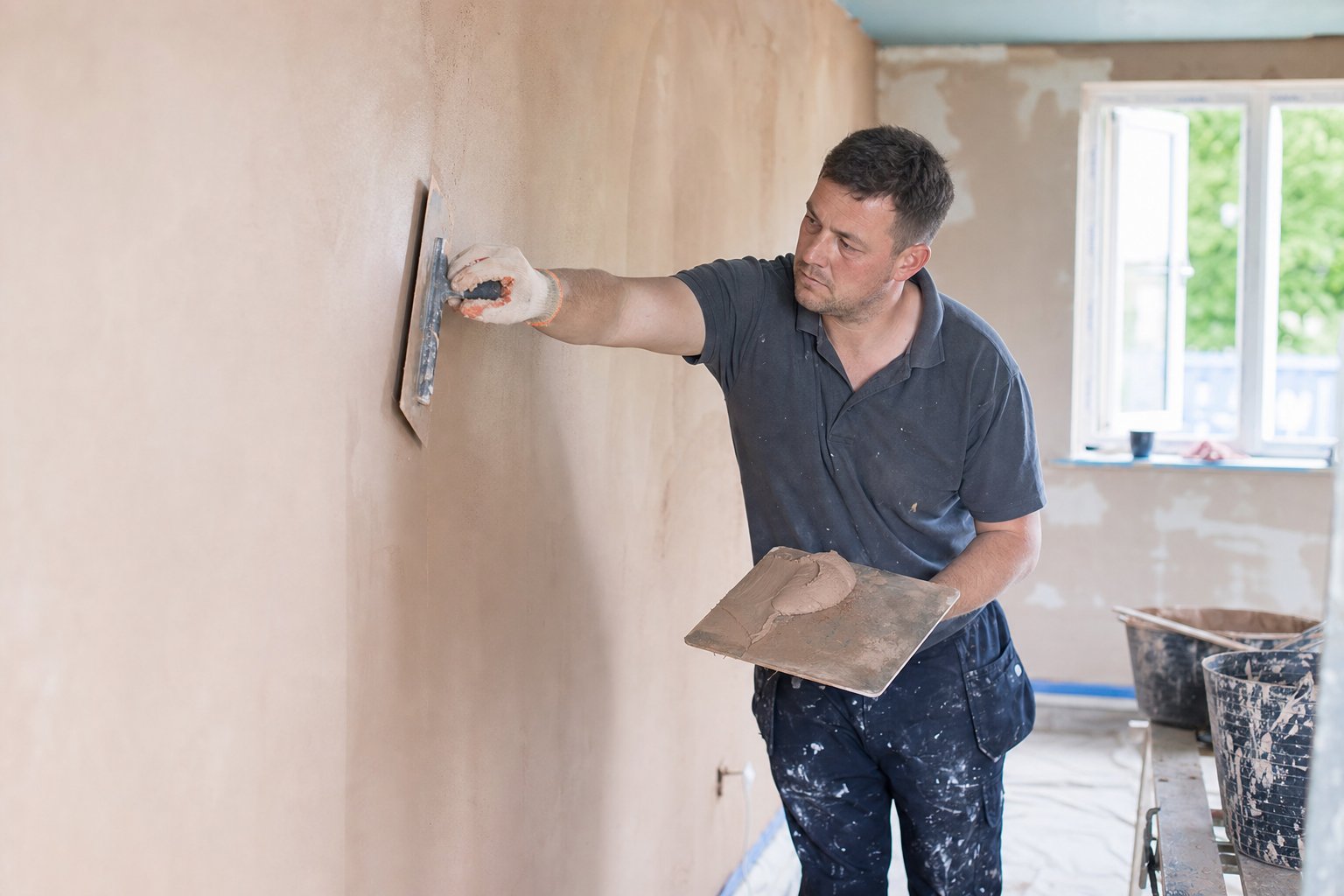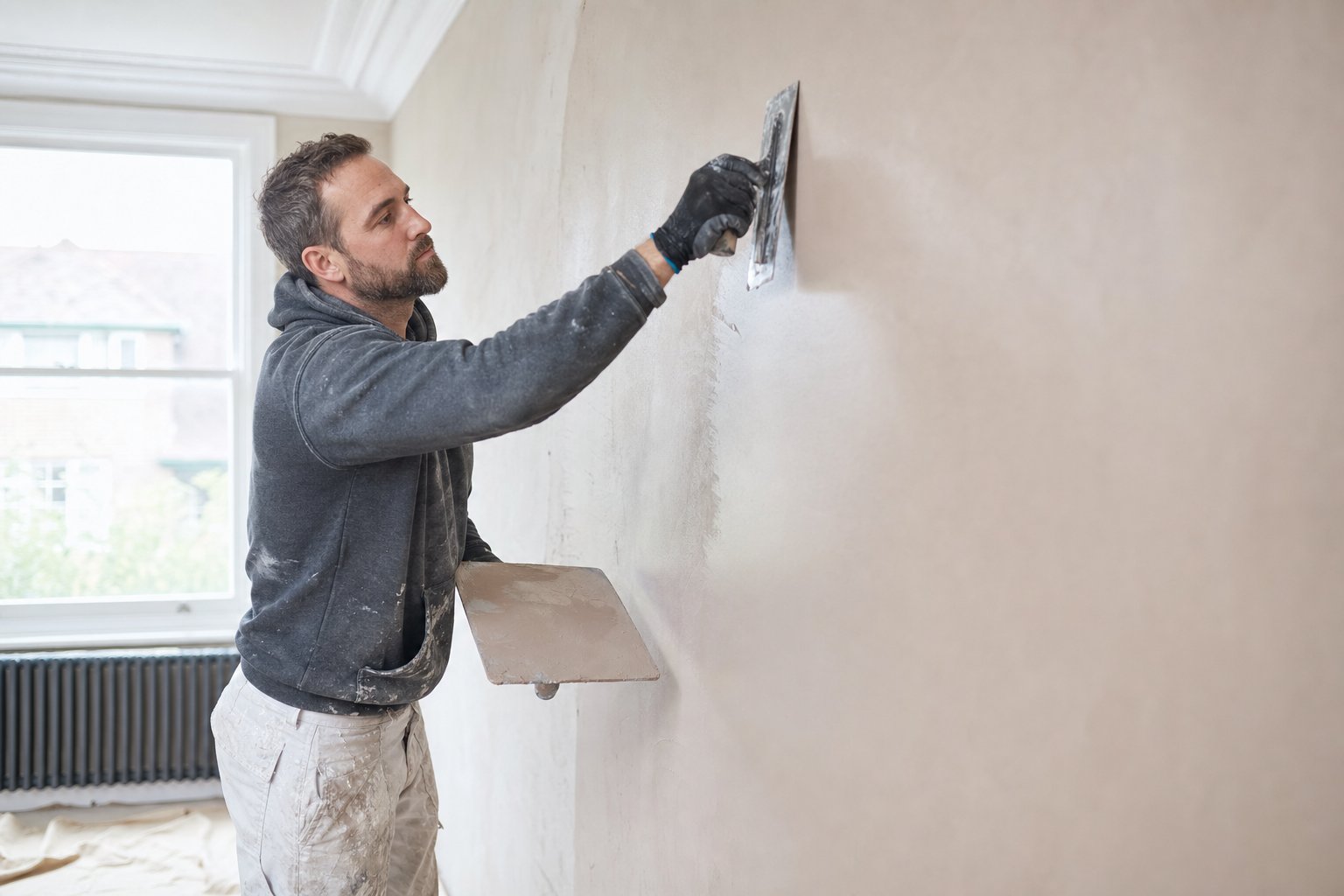
Good site organisation is not just about finishing earlier. For small plastering teams mentoring apprentices, it supports safer working, better evidence for NVQs and City & Guilds, and more structured learning on the job.
Plan the Day Around Learning Outcomes
Before tools come out, agree what the apprentice is expected to practise and record. Link tasks to real assessment evidence, such as setting up a work area, preparing backgrounds, mixing materials, applying finishes or cleaning down safely.
A five-minute briefing can save repeated stopping later. Explain the sequence, expected standard, tolerances, and who checks each stage. Keep it simple: “You set up, mix under supervision, apply the first coat to this bay, then we review before moving on.”
Common mistake: giving apprentices general labouring tasks all day.
Corrective action: assign one assessable skill per session and give feedback while the work is still fresh.
Set Up Stations That Teach Good Habits
Small teams lose time when tools, water, beads, plaster and waste areas are scattered. Use the setup as a training exercise. Ask the apprentice to organise a mixing station, clean water point, tool area and waste route, then check it against site rules and method statements.
This builds professional standards as well as speed. It also gives useful discussion points for CPD, toolbox talks and assessor visits.
Common mistake: experienced plasterers “just doing it themselves” because it is quicker.
Corrective action: let the apprentice set up first, then correct placement, housekeeping and material handling before work starts.
Build Evidence Into the Workflow
Photos, short notes and supervisor comments are easier to capture during natural pauses: after preparation, before covering work, and at completion. Keep records factual and linked to the qualification criteria where possible.
For example, note how the apprentice checked suction, protected adjacent surfaces, selected tools, maintained a tidy work area and followed manual handling guidance. This avoids trying to recreate evidence at the end of the week.
Common mistake: leaving portfolio evidence until Friday.
Corrective action: capture small pieces daily, including what was corrected and improved.
Safety Notes for Training on Busy Sites
Time-saving should never mean rushing supervision. Apprentices need clear boundaries around mixing equipment, hop-ups, plasterboard handling, dust control and wet plaster contact. Check PPE before work starts and stop poor habits early, especially trailing leads, overloaded buckets and blocked walkways.
Where an apprentice is preparing for assessment, treat safe organisation as part of competence, not an extra. A clean, planned work area shows readiness for progression as much as the finished wall does.