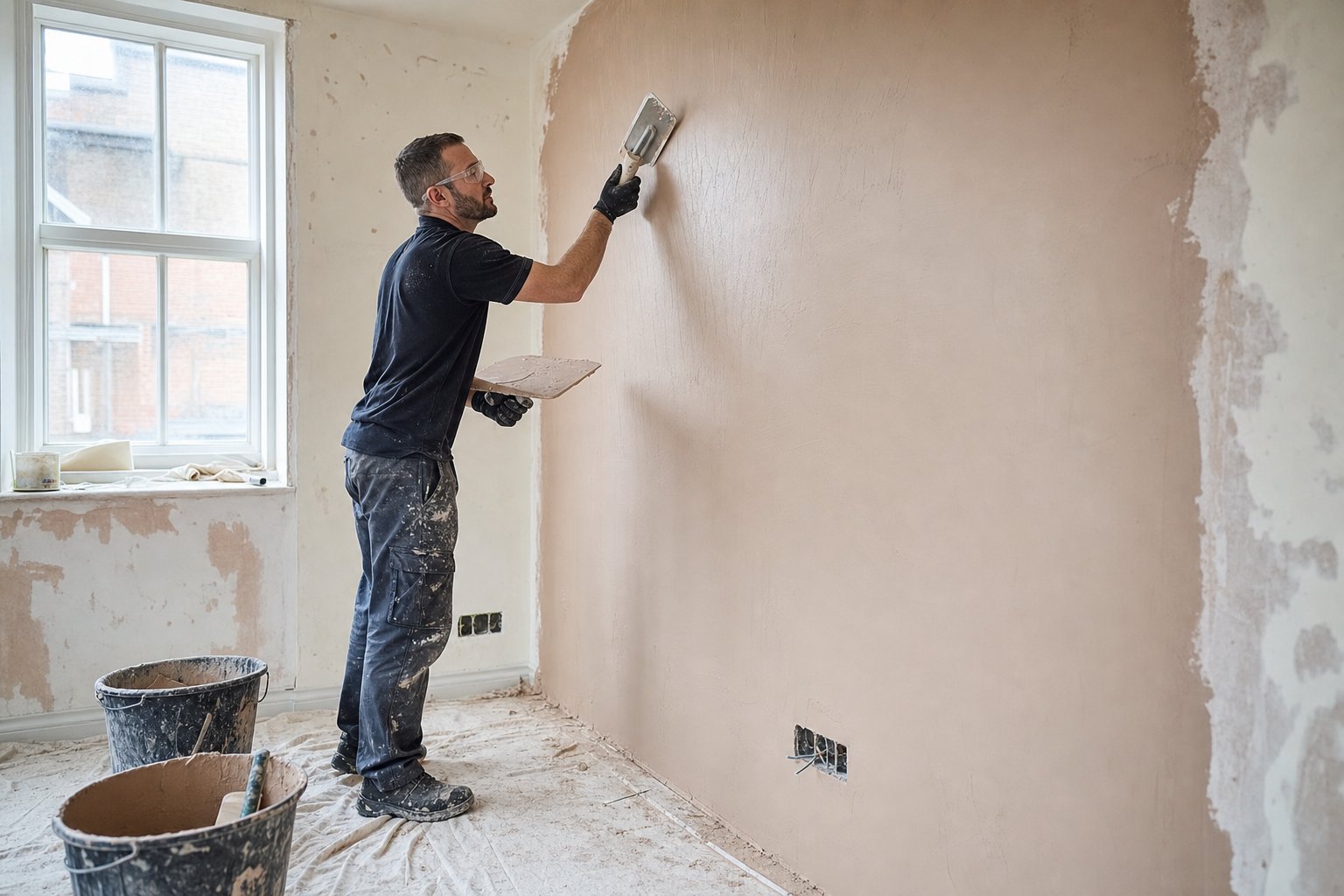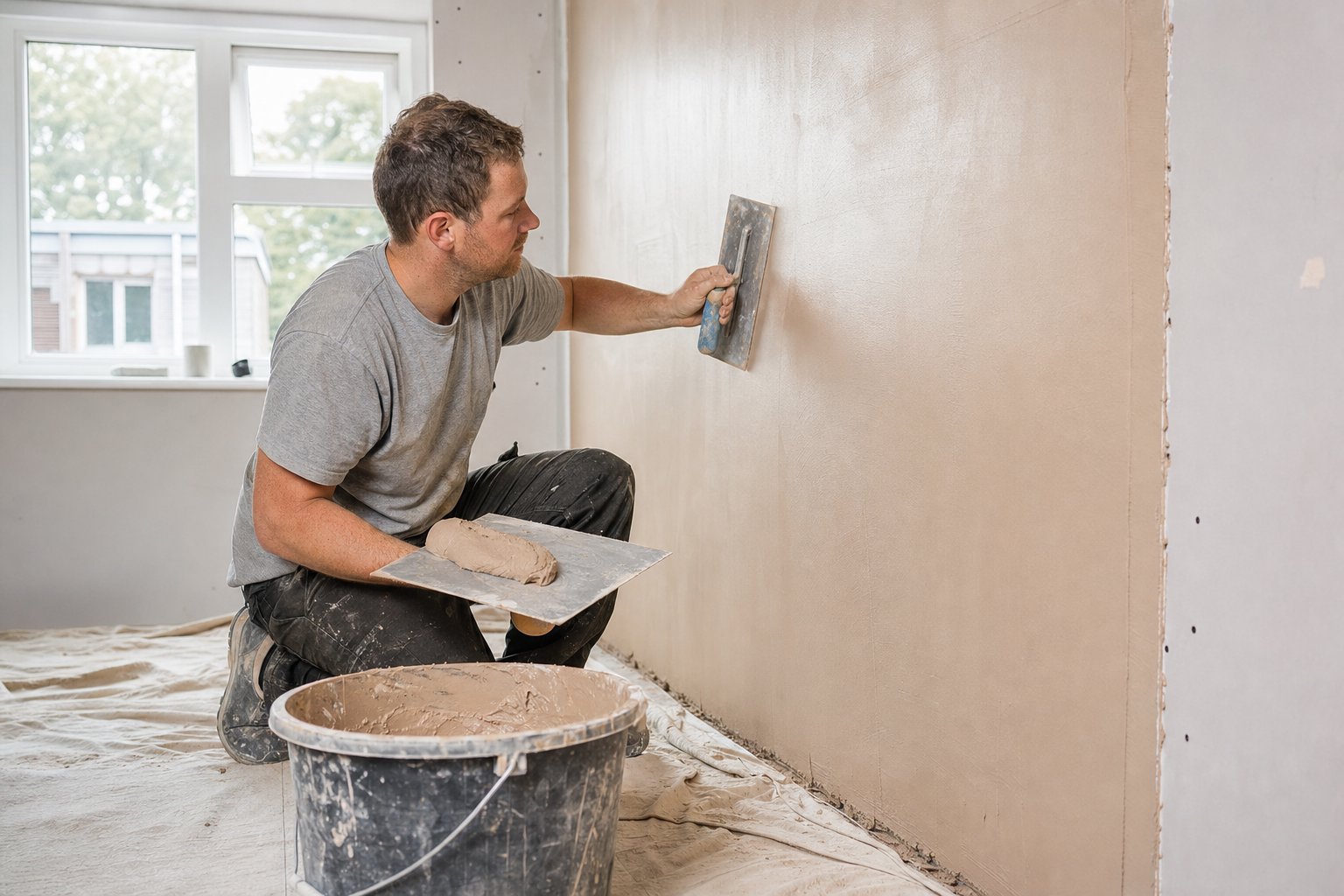
A practical site guide for newly qualified plasterers working with external render when the British weather changes by the hour.
Read the Weather Before the Wall
Render cracking often starts before the first coat goes on. In mixed conditions, rapid drying, rain exposure and cold nights can all stress the material.
Check the forecast for temperature, wind, rain and overnight lows. Avoid rendering onto frozen, saturated or very hot backgrounds. In breezy weather, remember that suction and surface drying can increase even when the temperature feels mild.
Site check: background firm, clean and evenly dampened; no standing water; beads fixed securely; scaffold sheeting available; materials stored dry and off the ground.
Control Suction and Thickness
Uneven suction is a common cause of crazing and shrinkage cracks. High-suction blockwork may need damping down or a suitable primer, depending on the render system. Low-suction backgrounds may need mechanical key or manufacturer-approved preparation.
Apply coats to the specified thickness and avoid “making up” hollows in one heavy pass. For traditional sand and cement work, build out in controlled layers, ruling off evenly and scratching the backing coat with a consistent key.
Technique tip: keep your mix consistent. Changing water content between batches can alter shrinkage and set times across the elevation.
Protect the Cure, Not Just the Finish
Fresh render needs steady curing. Direct sun, wind and rain can all cause failure if the coat is left exposed too early. Use sheeting to reduce wind and driving rain, but allow ventilation so condensation does not sit on the surface.
In warm or windy spells, light misting may help prevent rapid drying, where appropriate for the product. In colder conditions, avoid late application if temperatures may drop sharply overnight.
Safety reminder: secure scaffold sheeting properly, keep walkways clear of hoses and buckets, and wear eye protection when mixing dry materials or cutting beads.
Crack Prevention Checklist
Before leaving the elevation, inspect angles, openings and changes in background. These are high-risk cracking points. Reinforcing mesh should be correctly embedded where specified, especially around reveals, stress points and mixed substrates.
Check that movement joints are not bridged, beads are aligned, and the finish has been protected from weather impact. Small preparation decisions on site often make the difference between a sound render and an early repair.