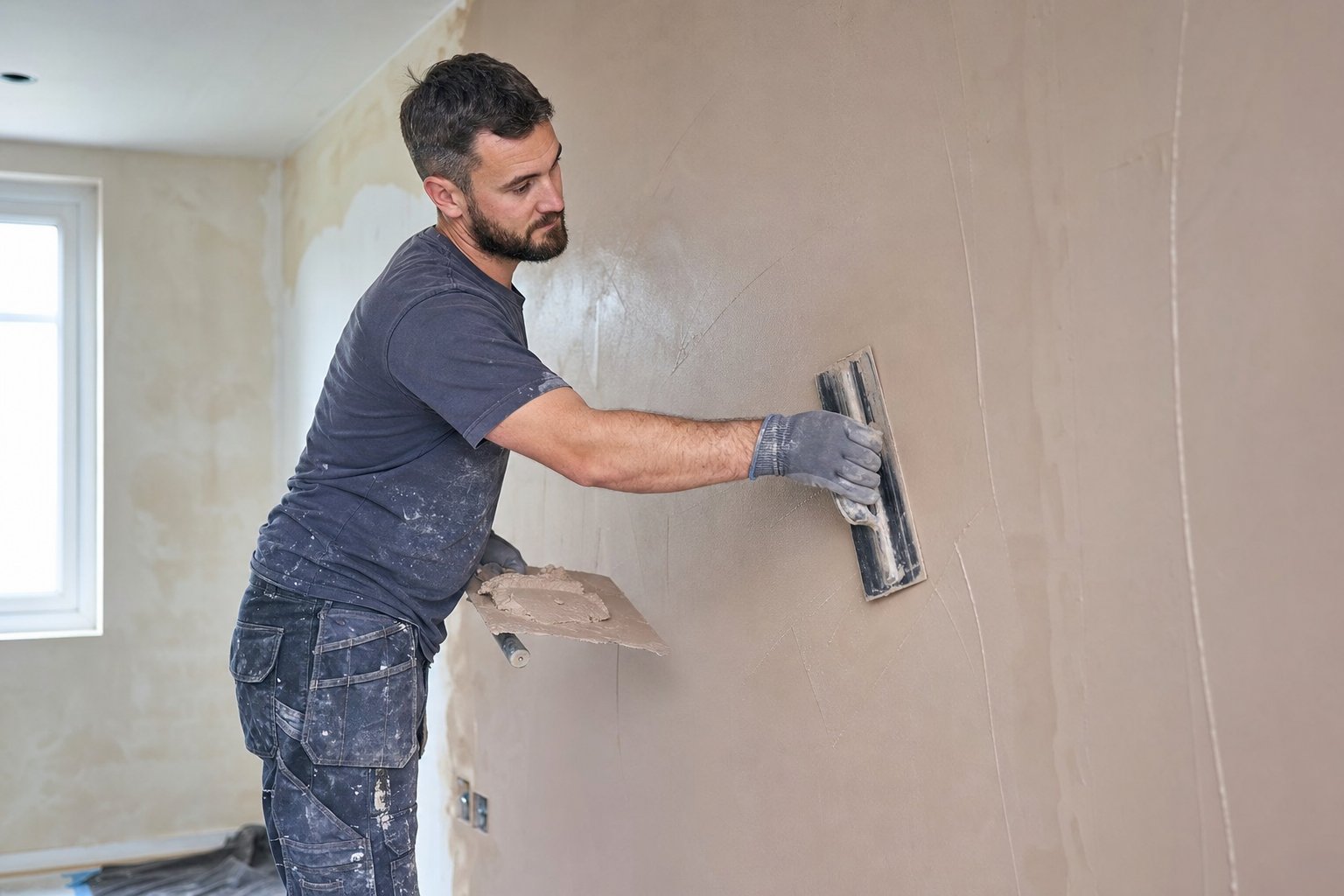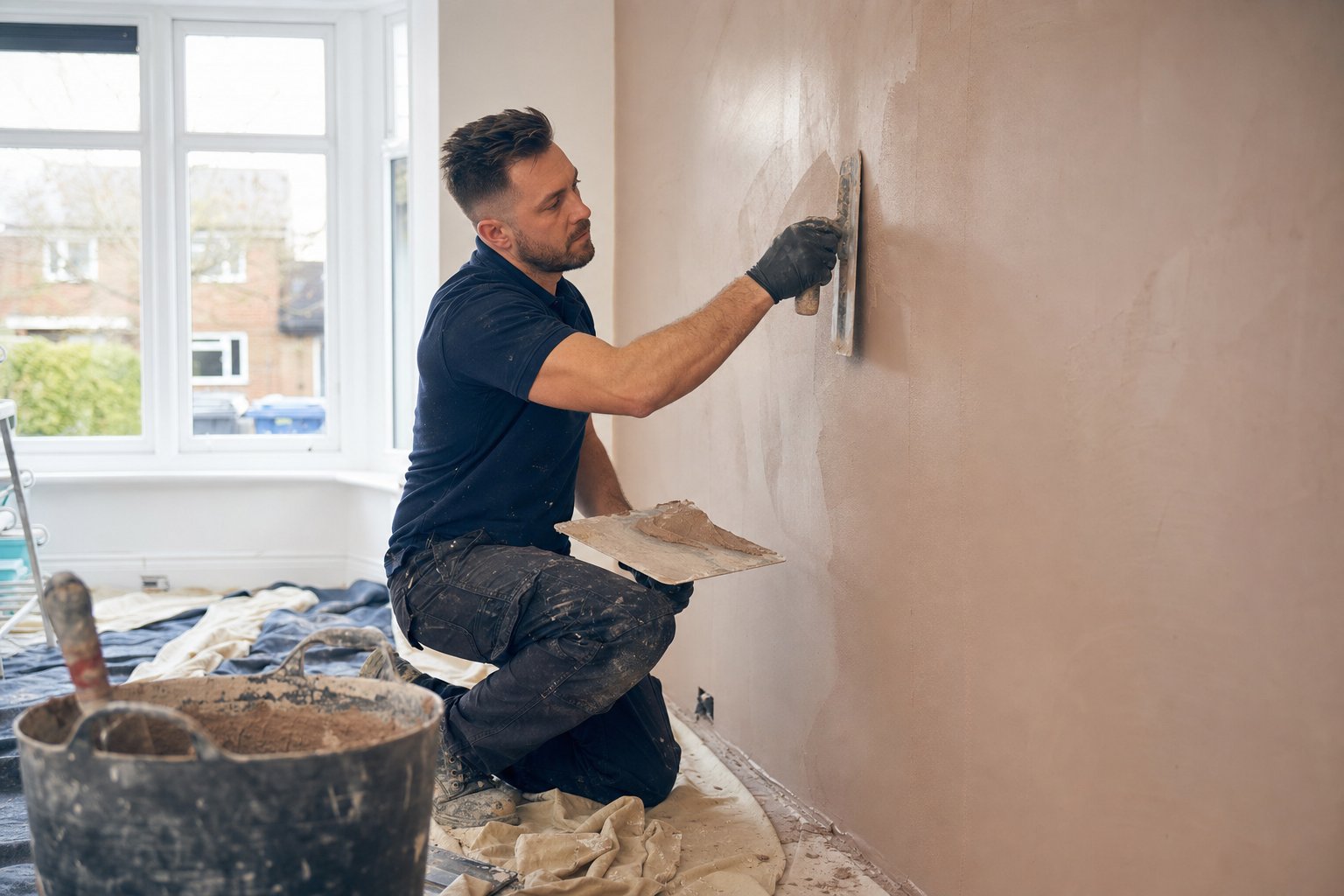
A small plastering team saves most time before the first hawk is loaded. With backing plasters such as Thistle BondingCoat, tidy sequencing helps create a sound, reliable background ready for finish, especially on smooth or low-suction substrates where product choice and preparation matter.
Sort the Background Before You Mix
Start each room with a quick substrate check: strength, suction, key, moisture and salts. British Gypsum guidance notes that backgrounds should be reasonably dry, protected from weather, clean and suitable to receive gypsum plaster .
For small teams, make one person responsible for marking walls: “BondingCoat”, “HardWall”, “prime”, or “lath”. Thistle BondingCoat is listed for smooth and low-suction backgrounds, so it earns its keep on dense surfaces and pre-cast concrete where the right backing coat prevents delays later .
Batch the Prep, Not the Problems
Keep beads, tapes, water, primer and clean buckets in one backing-plaster station. If plastering to plasterboard with Thistle BondingCoat, reinforce joints and angles with Gyproc Joint Tape; gaps over 3mm should be pre-filled before taping and allowed to stiffen, not dry, before undercoating .
On smooth or very low-suction areas, plan bonding-agent work early enough for drying. Thistle Bond-it is recommended for smooth and/or low-suction backgrounds and provides mechanical adhesion with fine aggregates .
Mix Clean, Apply Once
Clean kit is a genuine labour saver. Contamination from previous mixes can affect setting time and strength, so wash buckets and whisks straight after mixing . Use a slow-speed, high-torque whisk, then stop once lumps are dispersed; over-mixing wastes time and can harm workability .
Apply Thistle BondingCoat firmly, rule it flat, fill hollows while workable, and scratch the final floating coat lightly to key the finish. Where backing thickness needs building, use keyed coats rather than one heavy pass; greater thickness may need expanded metal lath support .
Safety, Drying and Handover
Maintain site conditions: Thistle plasters should only be applied where temperatures remain at 2°C or above until dry, and should not be used where temperatures exceed 49°C . Keep walkways clear of bags, manage dust when brushing backgrounds, wear eye protection when mixing, and avoid forcing heat onto fresh backing plaster. Leave a ruled, keyed, protected surface ready for the finishing coat.