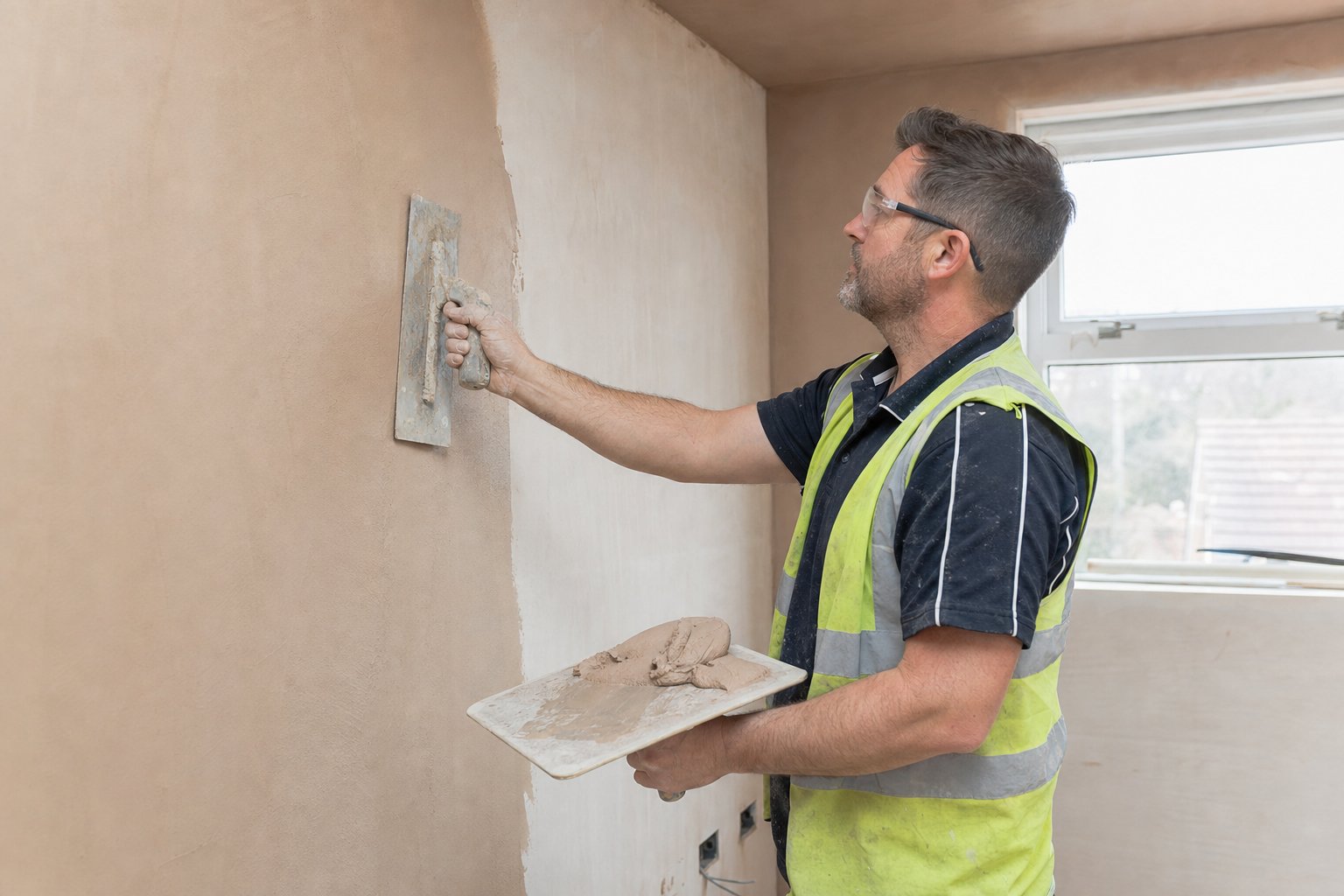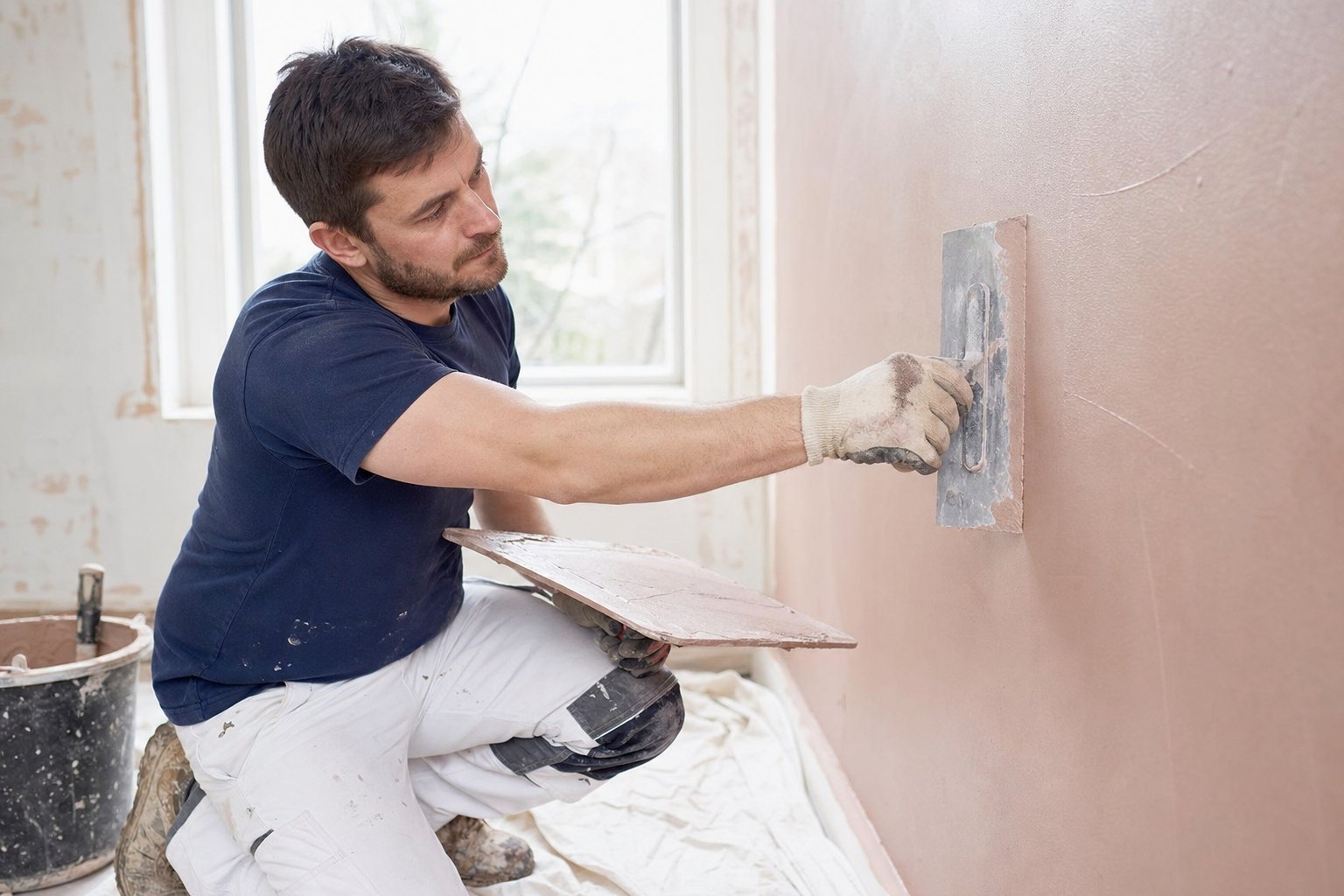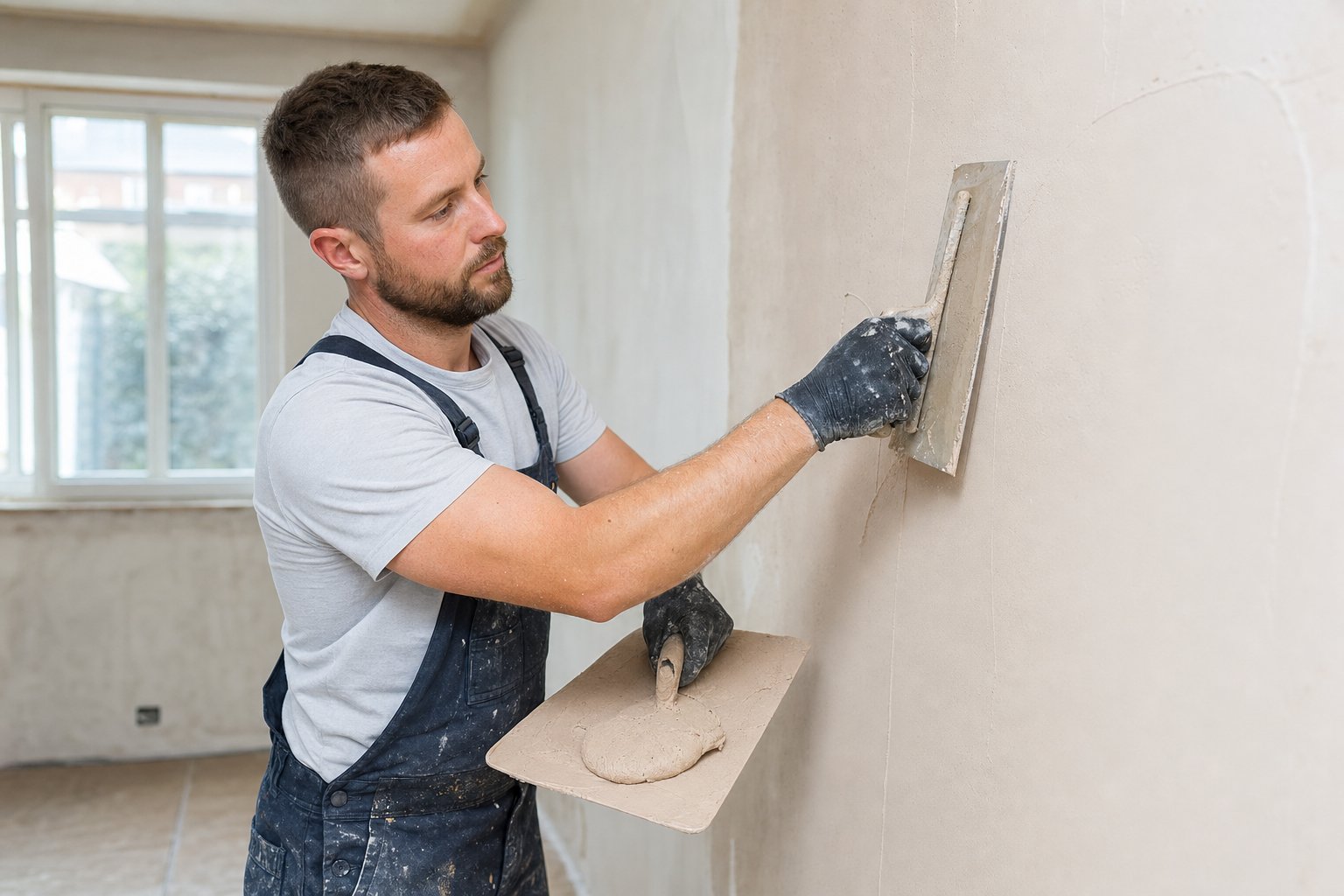
A flat, stable background is one of the best “materials” a plasterer can have. For site supervisors, checking how primers, backing coats, tapes and beads are used before skimming is key to reducing hollows, flashing and rework.
Read the Background Before Choosing the Product
Unevenness is not always the same problem. A high suction block wall, a patched gypsum board area and an old sand-and-cement backing all need different preparation.
Check the substrate for suction, friability, contamination and depth variation. Gypsum finishing plaster needs a sound, controlled background; it will not hide poor dubbing-out or unstable surfaces. Where suction is high, specify the correct primer or bonding agent and confirm it is applied to the manufacturer’s dilution and drying guidance. On low-suction or dense surfaces, make sure the chosen bonding product is compatible with the final skim system.
Build Out With the Right Material
For minor hollows, a suitable gypsum undercoat or patching compound may be enough. For deeper variations, supervisors should confirm the maximum build-up thickness on the product data sheet, rather than relying on “one more pass”.
Dubbing-out should be ruled level, allowed to set, and checked before skim starts. Avoid using finish plaster as a bulk-filling material; it is designed as a thin final coat. Where cement-based backgrounds are involved, ensure they are cured, dry enough and free from laitance before gypsum materials are introduced.
Control Junctions, Edges and Movement
Uneven backgrounds often show first at beads, board joints and changes of material. Beads should be fixed straight, plumb and proud to the required finished plane. Any twisted angle bead will force the plasterer to chase the defect across the wall.
Use scrim tape or specified joint tape at board joints and mixed-background junctions, bedded correctly and not left loose. Where movement is likely, check whether a proprietary movement bead or separation detail is required before skimming over the area.
Quality and Safety Checkpoints
Before final skim, supervisors should look for a consistent plane, firm background, controlled suction and clean surfaces. A straightedge check across patched areas is quicker than snagging a wavy wall after decoration.
Safety checks matter too. Follow product data sheets for mixing, dust control, ventilation and PPE. Gypsum and cement-based materials can irritate skin and eyes, and dry powders should be handled with suitable respiratory protection during mixing and sweeping.