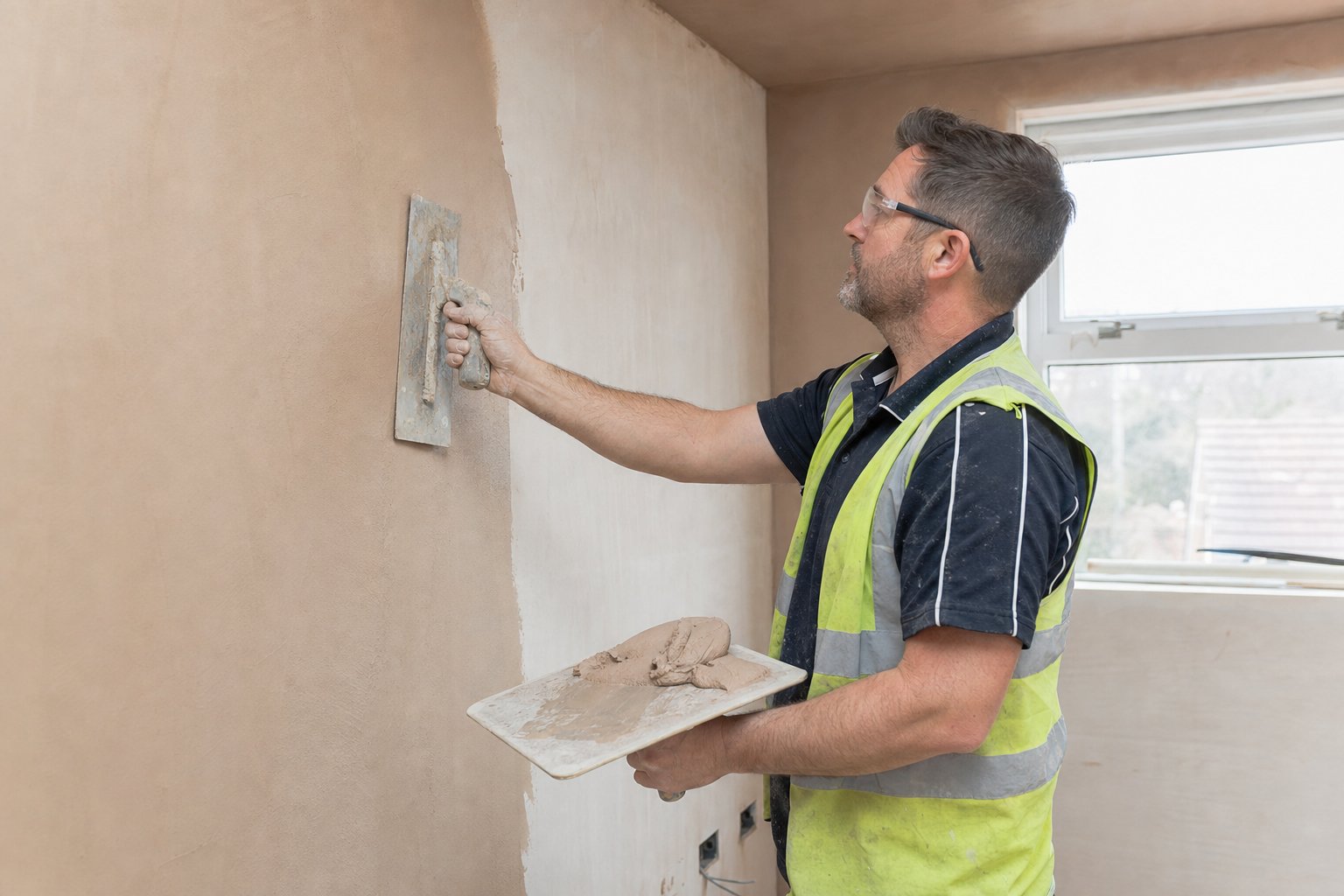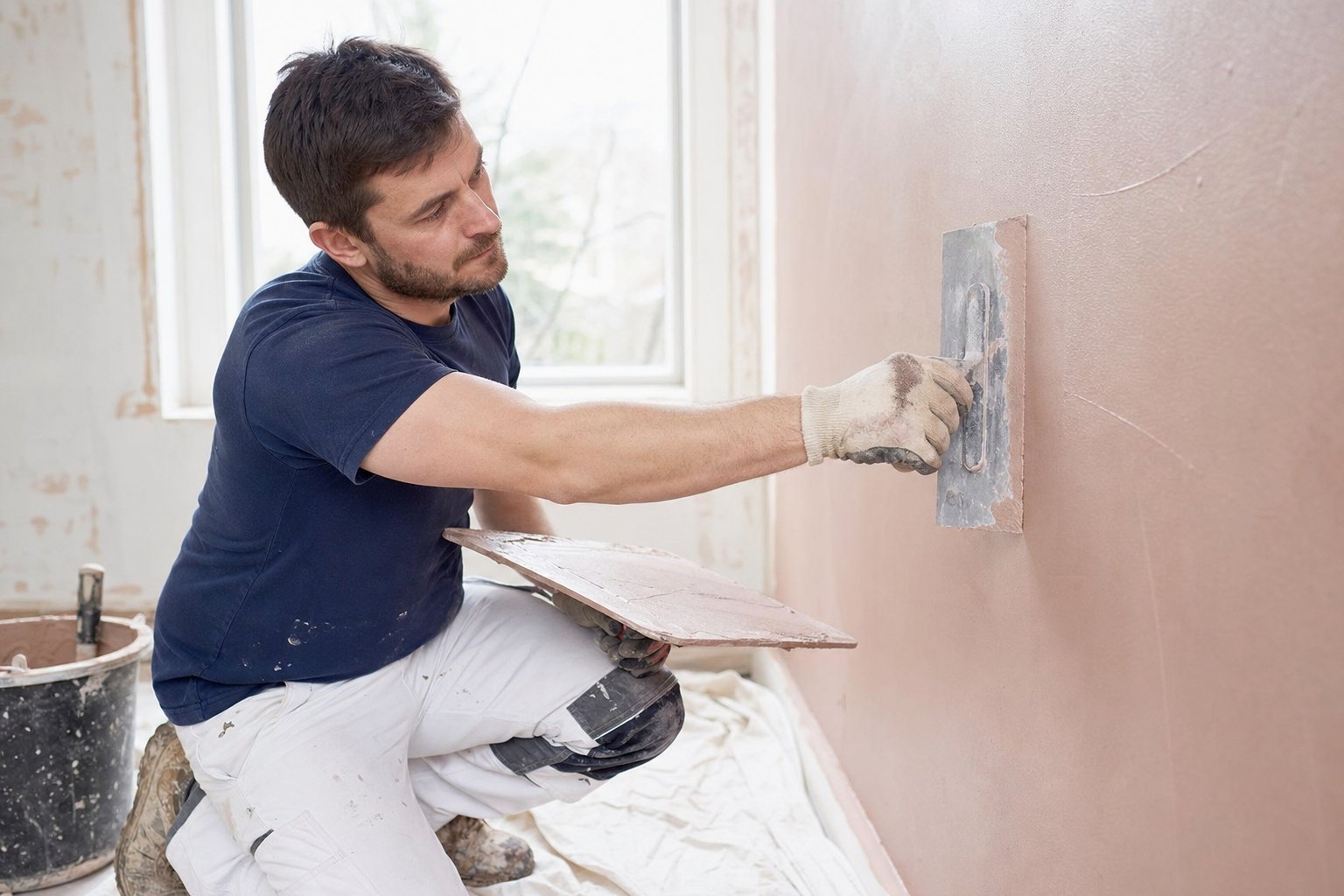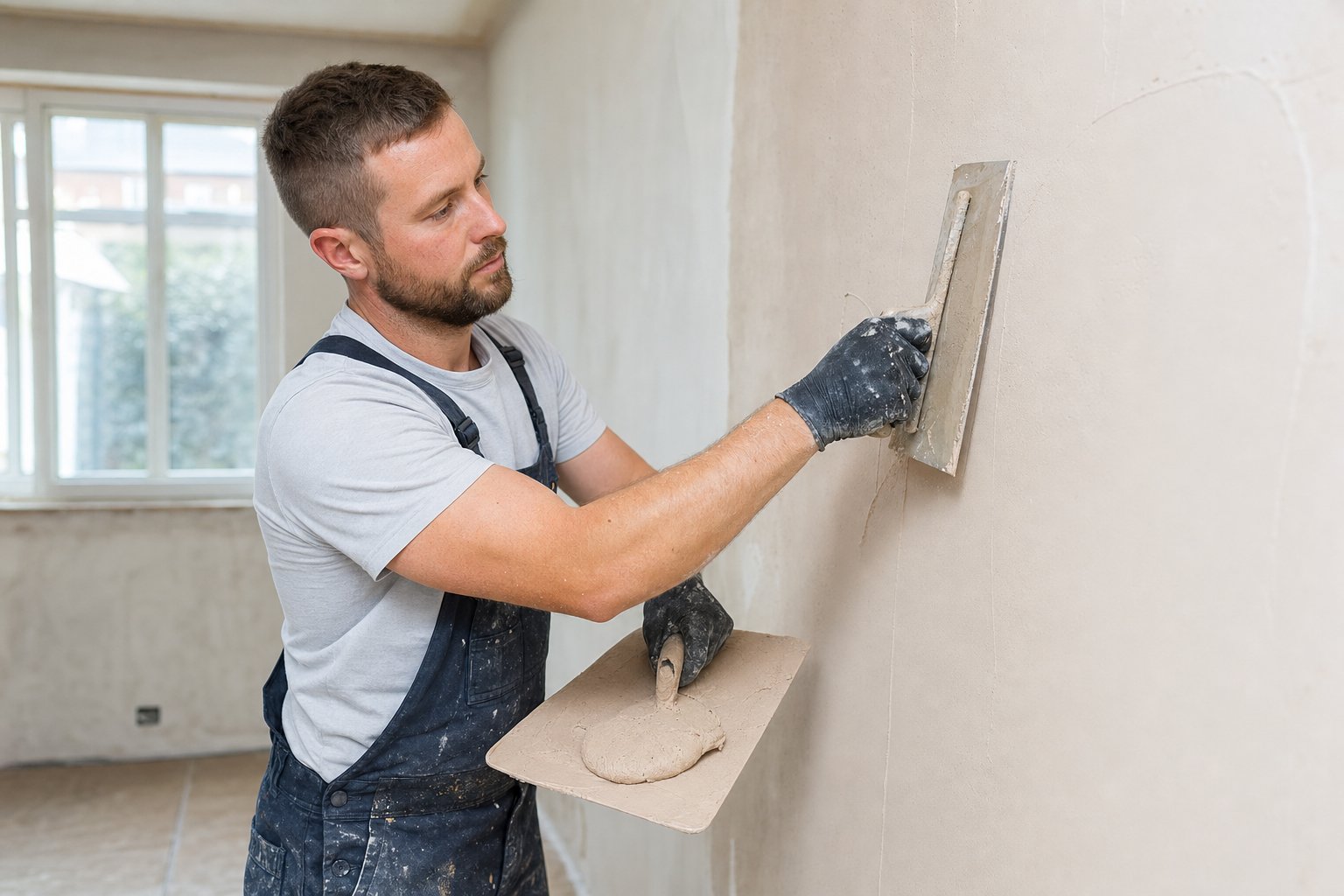
A good skim finish starts before the first mix. For site supervisors, consistent quality control comes from setting clear standards, checking materials, and keeping the team moving safely and cleanly.
1. Pre-Start Checks
Before work begins, confirm backgrounds are sound, dry, clean and suitably prepared. Painted surfaces, high suction backgrounds and board joints all need the right treatment before plaster is opened.
Supervisor check: confirm specification, plaster type, shelf life, storage condition, bead lines, jointing, suction control and access. Make sure clean water is available and mixing areas are protected.
Safety reminder: check lighting, ventilation, safe access and manual handling routes. Bags should be lifted correctly and stored where they will not become trip hazards.
2. Mixing and Application Control
Use clean buckets, clean water and the correct mixing sequence. Contaminated tools or dirty water can shorten working time and affect finish quality.
Keep the workflow tight: first coat laid on evenly, flattened at the right stage, second coat applied consistently, then trowelled through as the plaster firms. Supervisors should watch for over-wet mixes, missed hollows, heavy trowel marks and poor edge finishing.
Quality check: look across the wall under natural and temporary light where possible. Check angles, reveals, beads and sockets before the plaster fully tightens.
3. Safety During the Skim
Internal skimming is routine work, but risks remain. Wet plaster can irritate skin and eyes, and sanding or dry scraping creates dust.
Wear suitable PPE, including gloves and eye protection when mixing. Keep leads, water, stilts, hop-ups and boards controlled. Do not allow trailing cables or open buckets to clutter walkways.
4. Clean-Down and Handover
A clean finish includes a clean site. Wash tools promptly, remove splashes before they harden, and leave floors, frames and fittings protected.
Before handover, record any snagging, drying conditions and follow-on advice. Remind clients or other trades that fresh plaster needs ventilation, steady drying and mist coating only when fully dry.
Summary
Strong skimming quality is built on preparation, timing and clean working habits. A simple supervisor routine—check the background, control the mix, monitor the finish and manage clean-down—helps every room leave site looking professional.
CTA: Build these checks into your daily site brief and make quality control part of the workflow, not an afterthought.