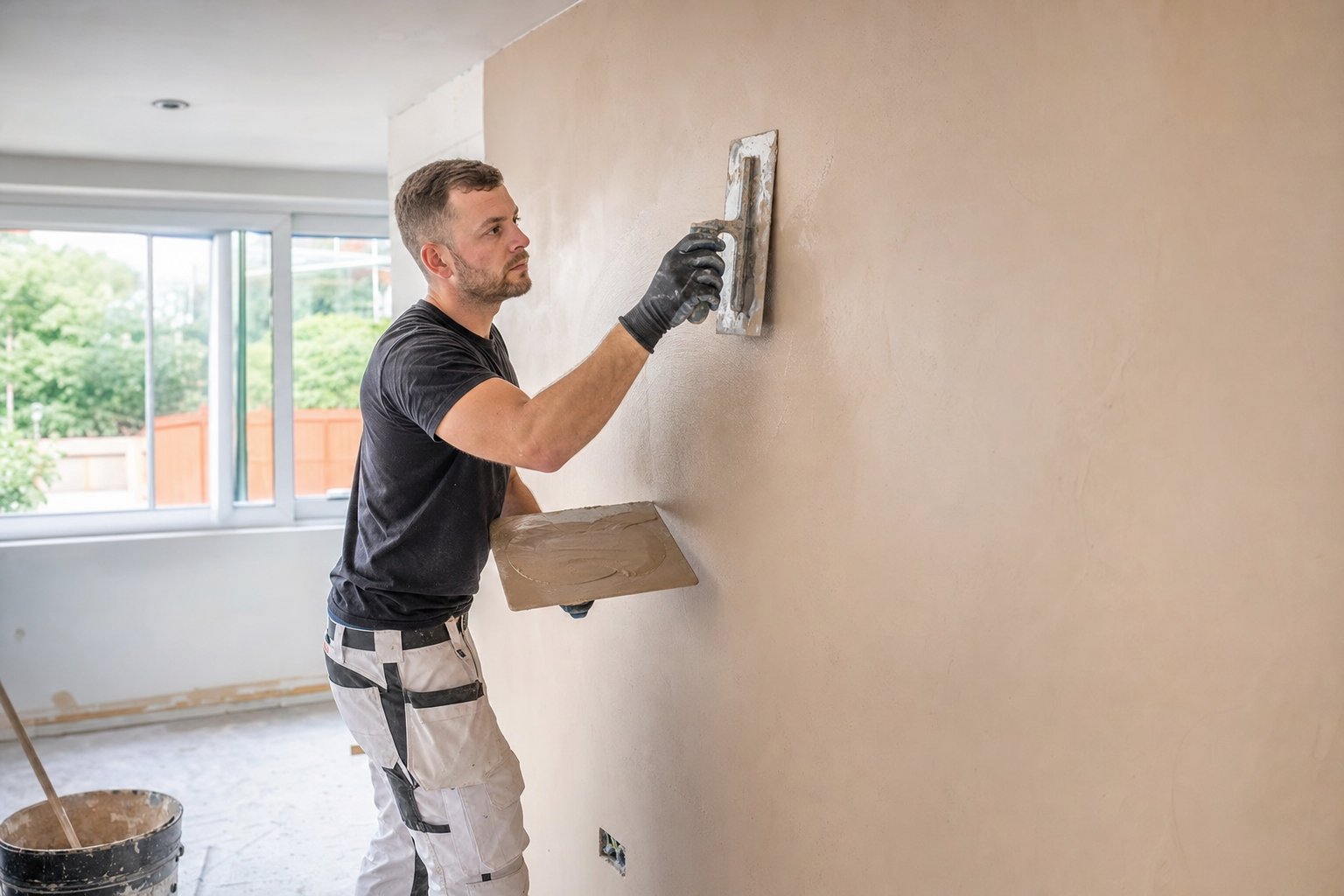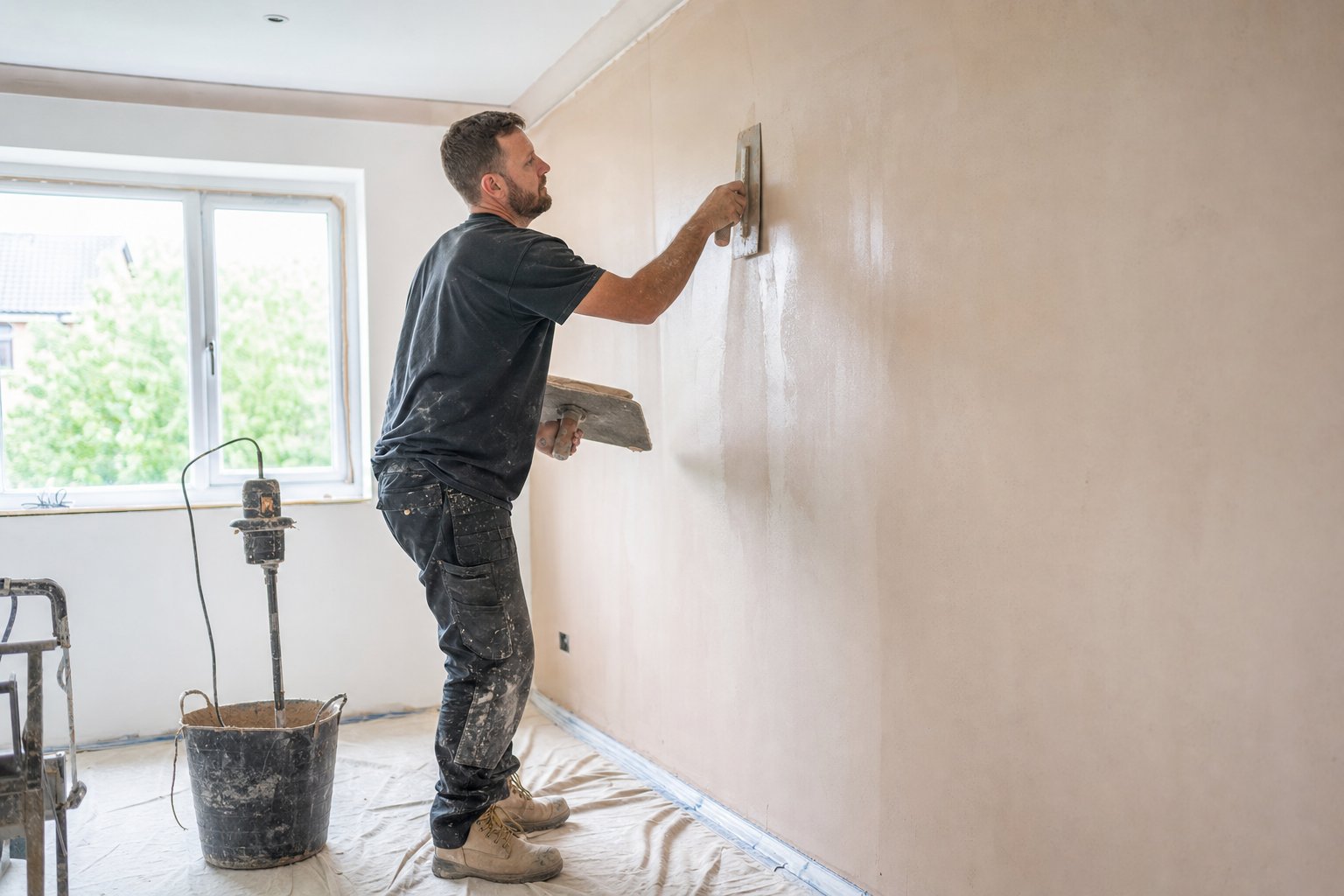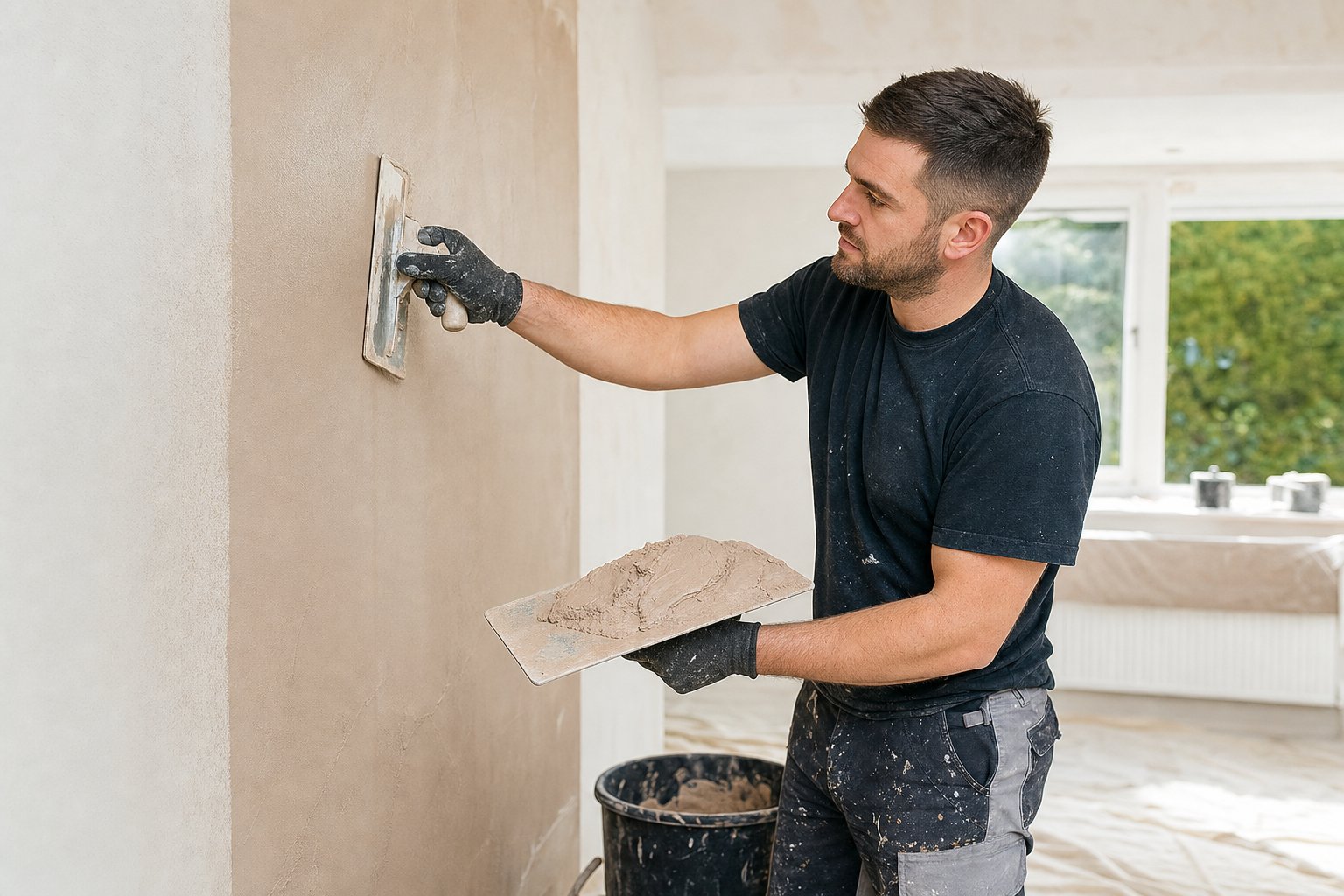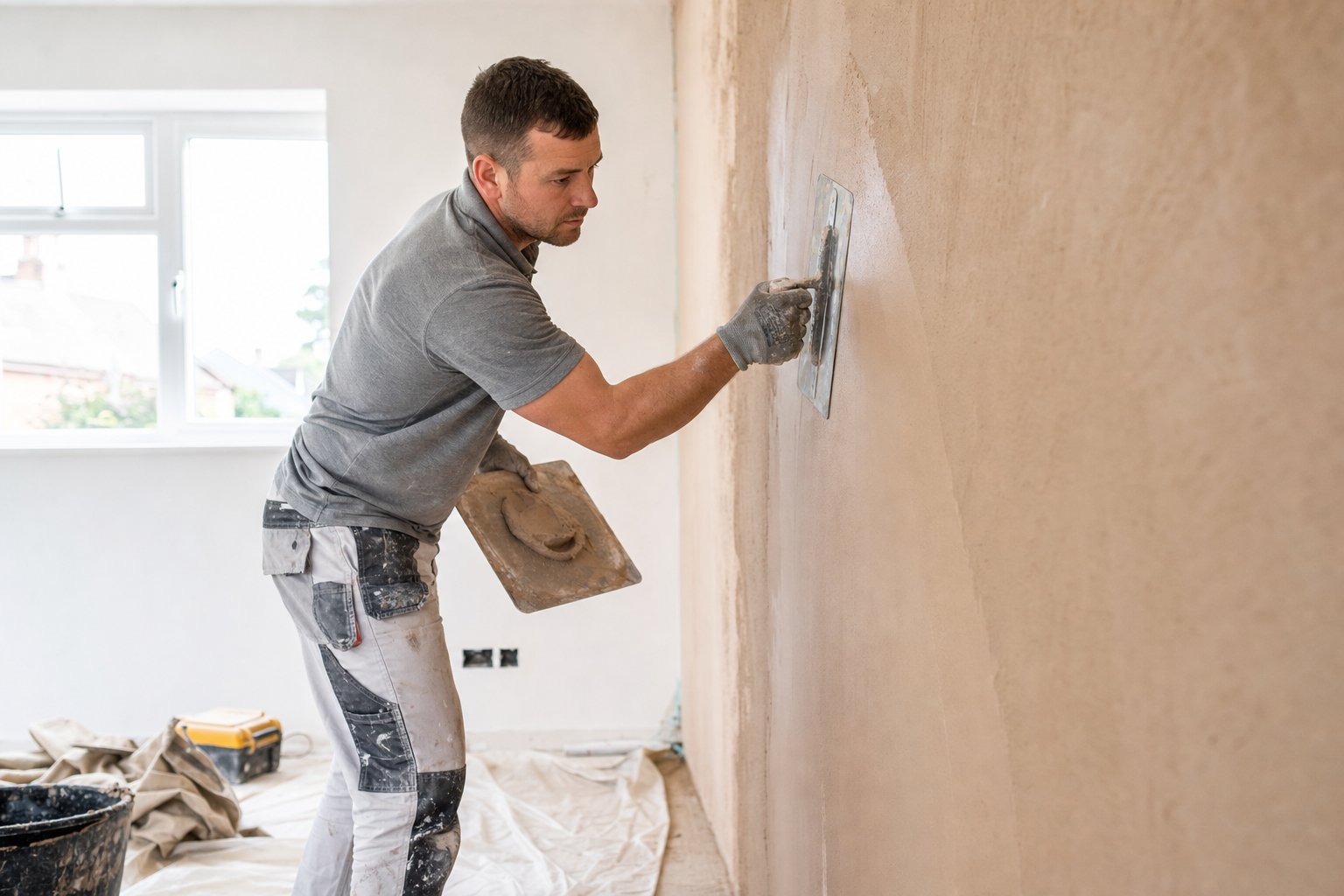
A clean skim starts long before the trowel hits the board. On lightweight steel framing, small highs, lows and misalignments in partitions, wall linings or MF ceilings can quickly show through as ripples, cracked joints or poor light reflection.
Check the Frame Before Blaming the Board
Uneven backgrounds often come from the metalwork rather than the plasterboard. Before skimming, sight along studs, channels and MF ceiling sections to check for proud members, twisted studs or inconsistent fixing centres.
On partitions and wall linings, use a straightedge across the boarded surface and mark any high spots or hollows. Around door openings, service penetrations and deflection heads, check that board edges are properly supported and not flexing. In MF ceilings, pay close attention to perimeter channels, hangers and primary sections, as small level errors can become obvious under downlights.
Practical Corrections Before Skim
Where a board is proud, check whether the screw has pulled the board tight to the metal. Missing or under-driven screws are a common cause of movement and unevenness. Re-fix to the manufacturer’s spacing guidance and avoid breaking the board paper.
For hollows caused by poor framing alignment, do not simply “lose it” with extra skim. Correct the background first where possible. This may mean packing, re-fixing, adding support noggings, or replacing a damaged board section. On acoustic or fire-rated systems, only use compatible components and maintain specified board layers, sealants and fixing patterns.
At joints, ensure tapered edges are properly aligned and fully supported. Feather joint treatment neatly and allow it to set before skimming. Rushed joint build-up can leave ridges that become visible once decorated.
Common Mistakes and Corrective Actions
A frequent mistake is overloading skim to compensate for an uneven MF ceiling. This adds weight and can still leave shadowing. The better correction is to level the metal frame and re-secure boards before finishing.
Another issue is sanding through board paper on high spots. If this happens, seal or replace the affected area as required before applying finish. Do not skim over loose paper.
Ignoring movement at deflection heads is also risky. Keep required gaps and details intact; filling them solid can compromise the system’s performance.
Safety Notes on Metal Framing Work
Wear gloves when handling cut metal sections, as edges can be sharp. Use eye protection when drilling, fixing overhead MF ceilings or cutting track and stud. For ceiling checks, work from a stable platform, not steps balanced on uneven floors. Always confirm that fire-rated and acoustic systems remain compliant after any corrective work.