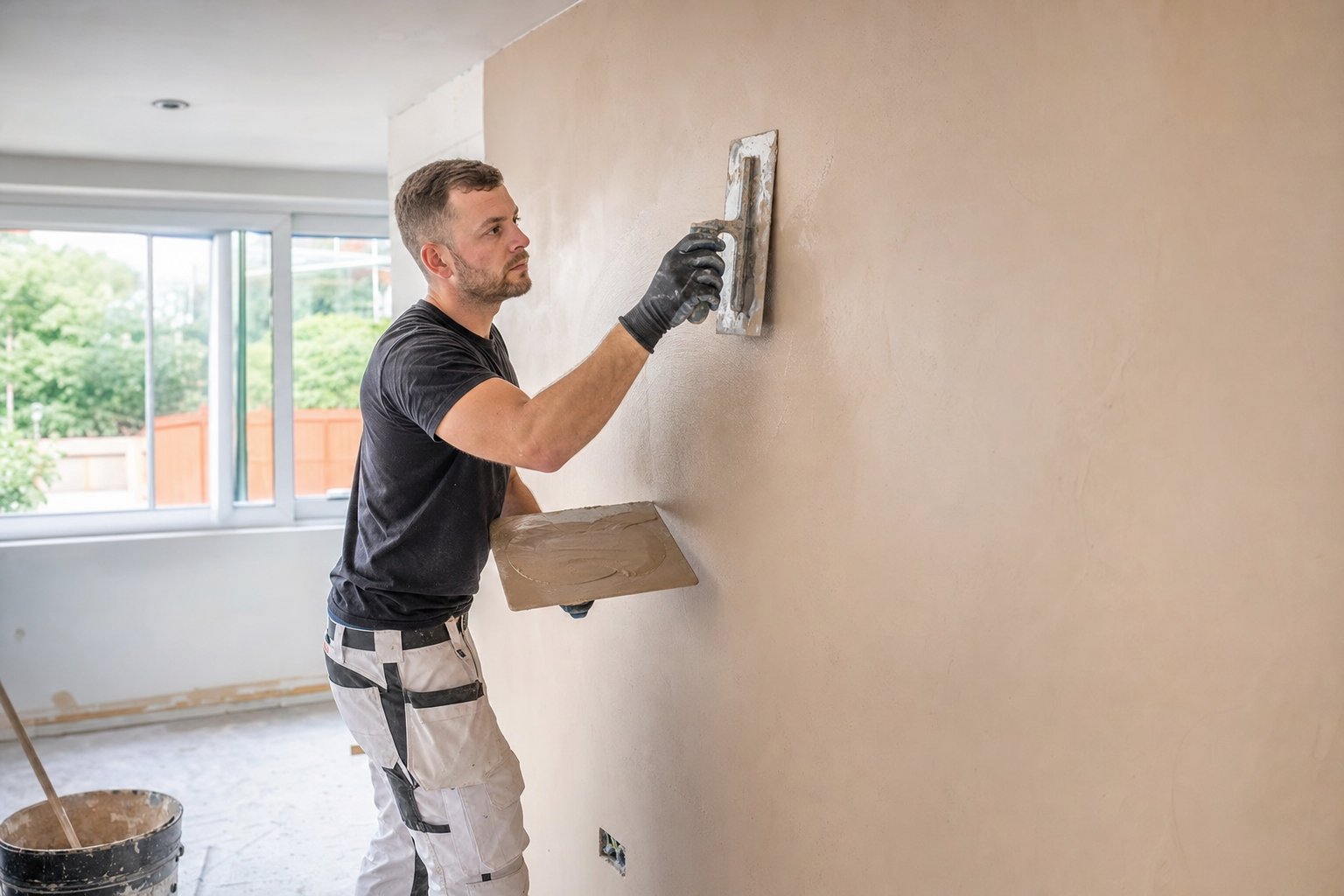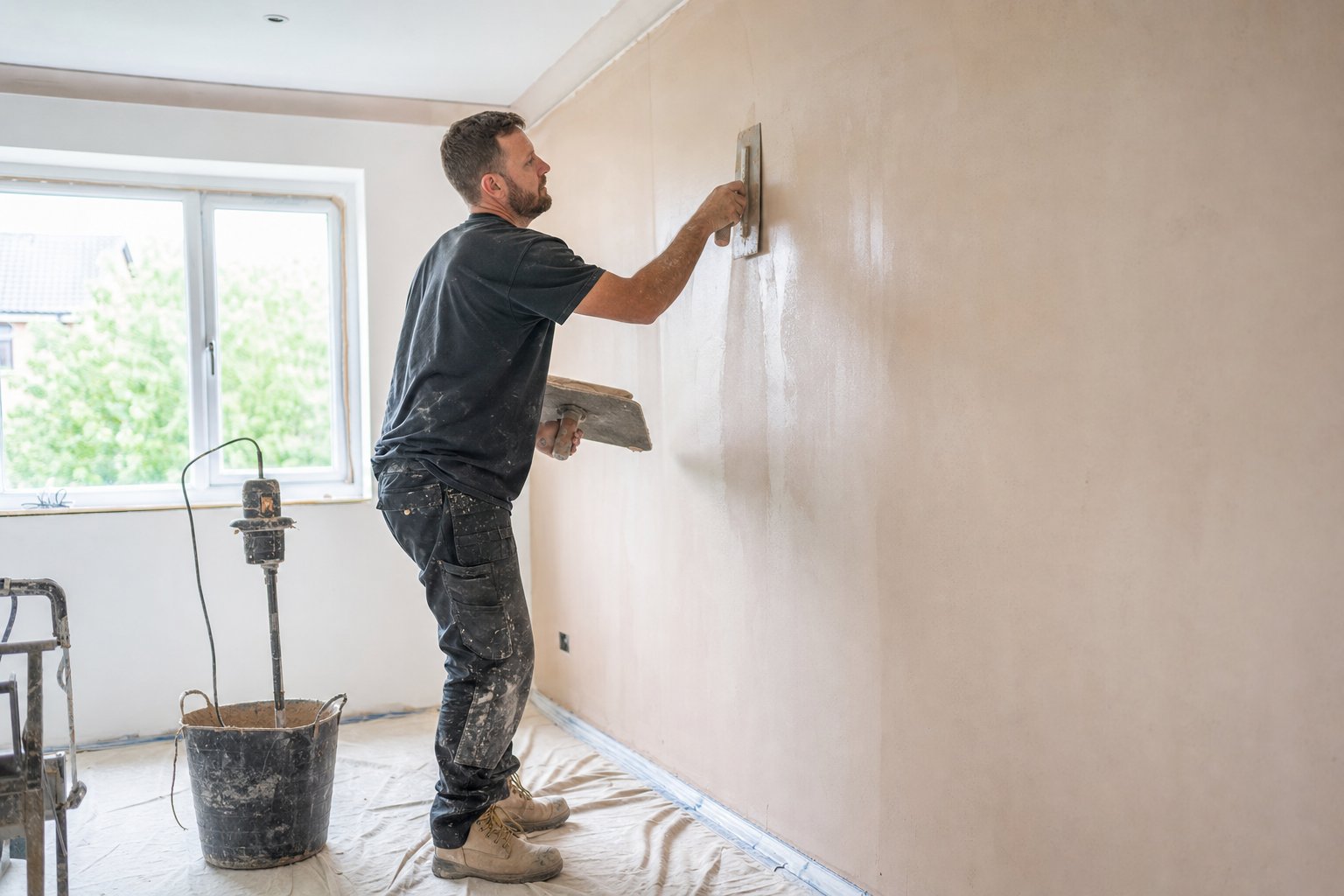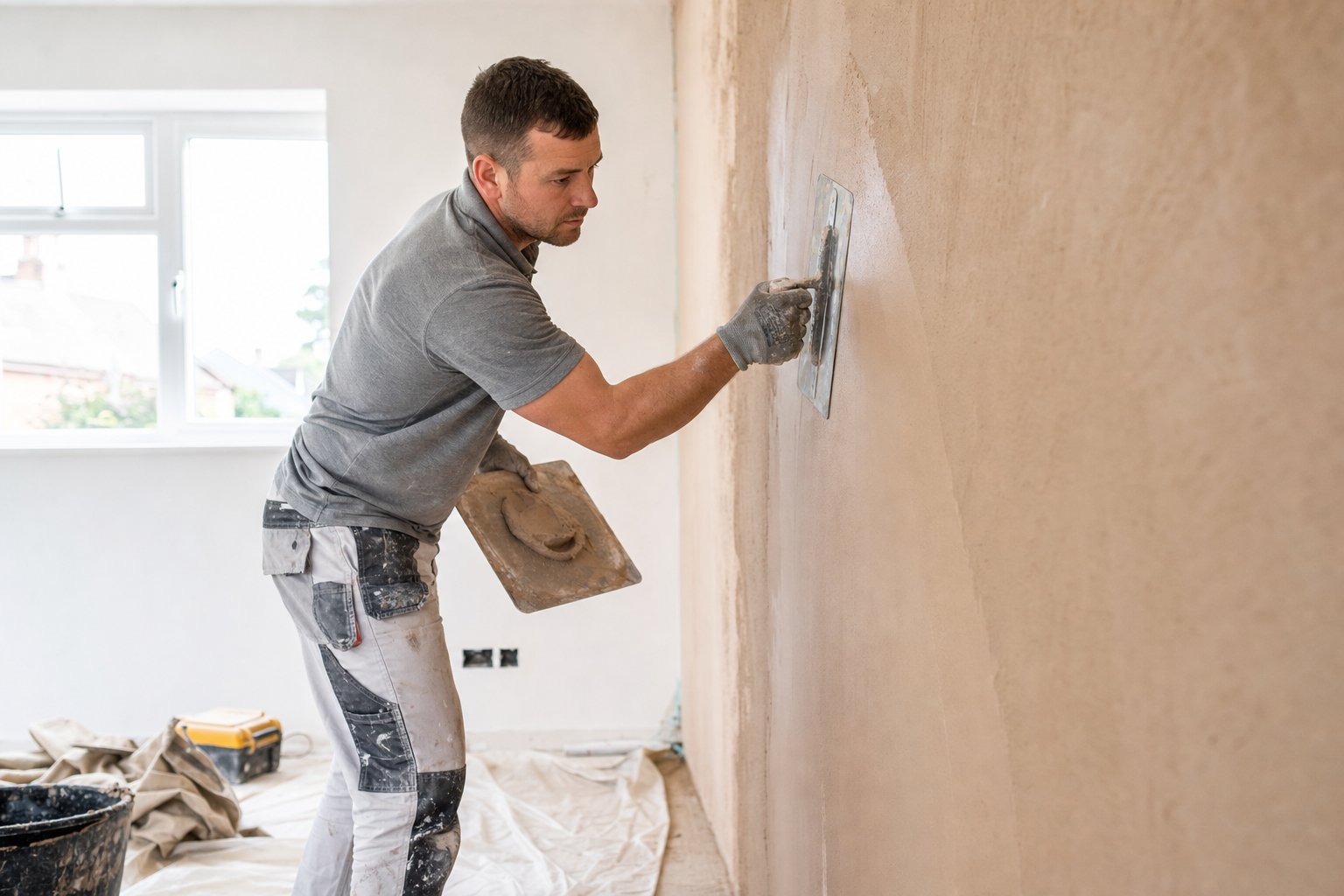
A predictable set starts before the trowel hits the board. On metal framing systems, where plasterboard backgrounds can vary with airflow, board temperature and site sequencing, getting the mix right helps newly qualified plasterers keep timing, finish and confidence under control.
Why Metal Framing Can Change the Feel
Metal stud partitions and MF ceilings often sit in fast-moving site conditions. Open elevations, temporary heating and draughts through service voids can pull moisture from skim faster than expected. Fresh plasterboard, dusty boards or areas around beads and fixings may also affect suction.
Before mixing, check the background. Boards should be fixed firm, dry, clean and correctly jointed. Scrim should be bedded flat, beads secure, and any high-suction or damaged areas treated as specified. If the wall feels cold or the room has strong airflow, expect the set to behave differently from a sealed, warm room.
Getting the Mix Consistent
Use clean water, a clean bucket and the same mixing method each time. Add plaster to water, not water to plaster, and avoid guessing by eye if you are still building experience. A good skim mix should sit on the hawk without slumping, spread smoothly, and close up without dragging.
A practical site check is simple:
- same water level for each mix
- same bag-to-water ratio
- clean paddle and bucket between mixes
- no re-tempering once the set has started
- note room temperature, airflow and board condition
If the mix is too wet, it may hang open too long, sag on ceilings and leave a weaker surface. If it is too stiff, it can tear, drag and shorten your working time. Small, repeatable adjustments are better than trying to rescue a poor mix halfway through a set.
Troubleshooting the Set
If plaster is firming too quickly, check for dirty buckets, warm water, high suction, draughts or old material. On metal frame ceilings, heat trapped above boards or airflow through service gaps can speed things up unexpectedly.
If it stays wet, look at cold conditions, low background suction, over-wet mixing or poor ventilation. Do not force the finish with excessive water. It may look acceptable at first but can lead to soft surfaces, polishing issues and inconsistent decoration.
Safety Notes on Site
Wear eye protection when mixing and avoid breathing plaster dust. Use suitable gloves where needed, as wet plaster can irritate skin. Keep leads, buckets and bags clear of access routes, especially around mobile towers and hop-ups. When working on MF ceilings or high partitions, make sure platforms are inspected, stable and set at the right height before starting the gauge.