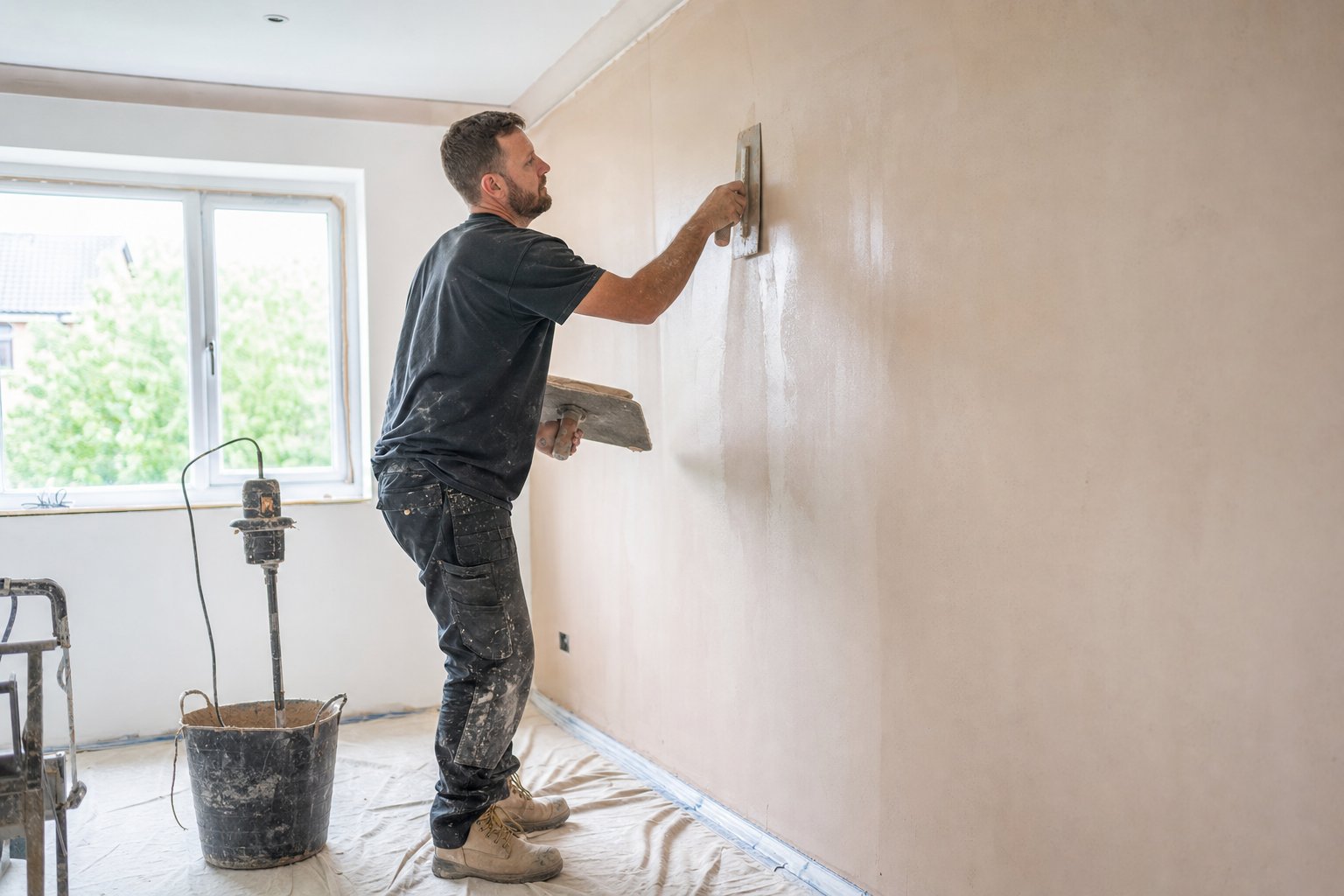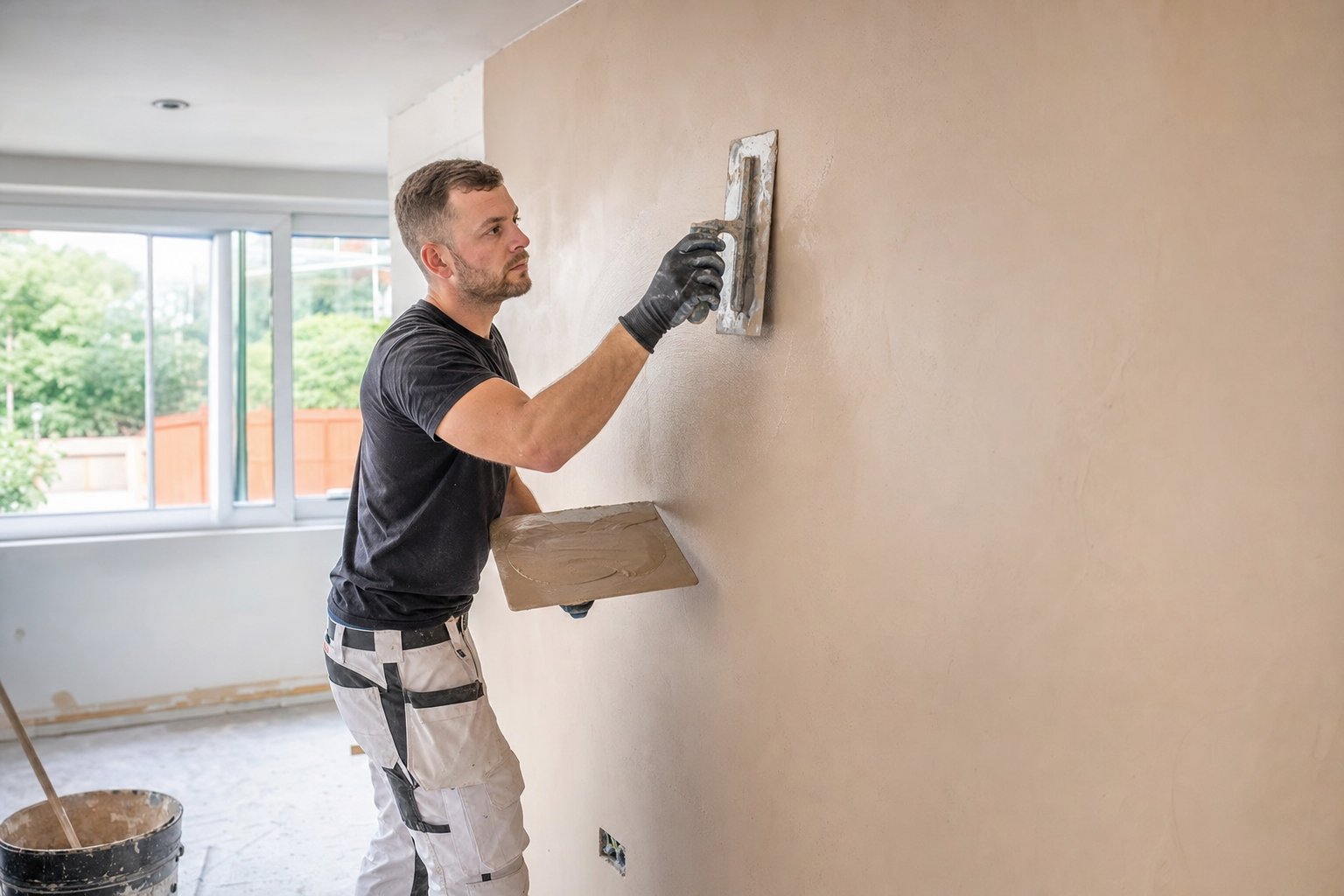
In lightweight steel framing work, predictable plaster set starts before the trowel touches the board. Partitions, wall linings and MF ceilings all rely on consistent background conditions, correct board fixing and a mix that suits the system, not just the habit of the spread.
Read the Frame Before You Mix
On metal stud partitions and MF ceilings, check the board line first. Proud screw heads, loose boards, excessive deflection or open board joints can make a good mix behave badly. Movement in the frame may drag moisture unevenly from jointing or skim coats, causing tearing, delayed set or patchy finish.
Before mixing, confirm boards are securely fixed to the manufacturer’s centres, joints are correctly staggered, and any fire-rated or acoustic build-up has not been compromised by missing fixings or damaged boards.
Troubleshooting the Mix
If the plaster feels stiff too early, avoid knocking it back with extra water. That weakens the set and can affect finish quality on plasterboard-faced metal systems. Instead, check whether the bucket, whisk or water was contaminated with old plaster, and whether the room is warm from temporary heating.
If the mix stays wet on MF ceilings or wall linings, look for cold steelwork zones, poor ventilation, or high site humidity. Metal framing can create cooler pockets, especially near external walls or soffits, slowing the set across certain areas.
Aim for a creamy, lump-free mix that holds on the hawk without slumping. For ceilings, it should spread cleanly without excessive pressure, reducing stress on boards and fixings.
Quality Checkpoints During Application
Watch the first few metres. On partitions, uneven suction at board joints often shows as ridging or faster tightening over scrim lines. On fire-rated systems, do not overwork the surface or flood joints with water, as the board and joint treatment form part of the tested build-up.
For acoustic linings, keep the finish controlled around perimeters. Avoid forcing wet plaster into movement gaps or sealant zones designed to maintain acoustic performance.
Safety Notes
Use eye protection when mixing, and keep trailing leads clear of metal track, studs and ceiling grid. Do not overload hop-ups or platforms when working below MF ceilings. Wet plaster, steel framing offcuts and plasterboard dust make slips and cuts more likely, so keep the working area clean as you go.