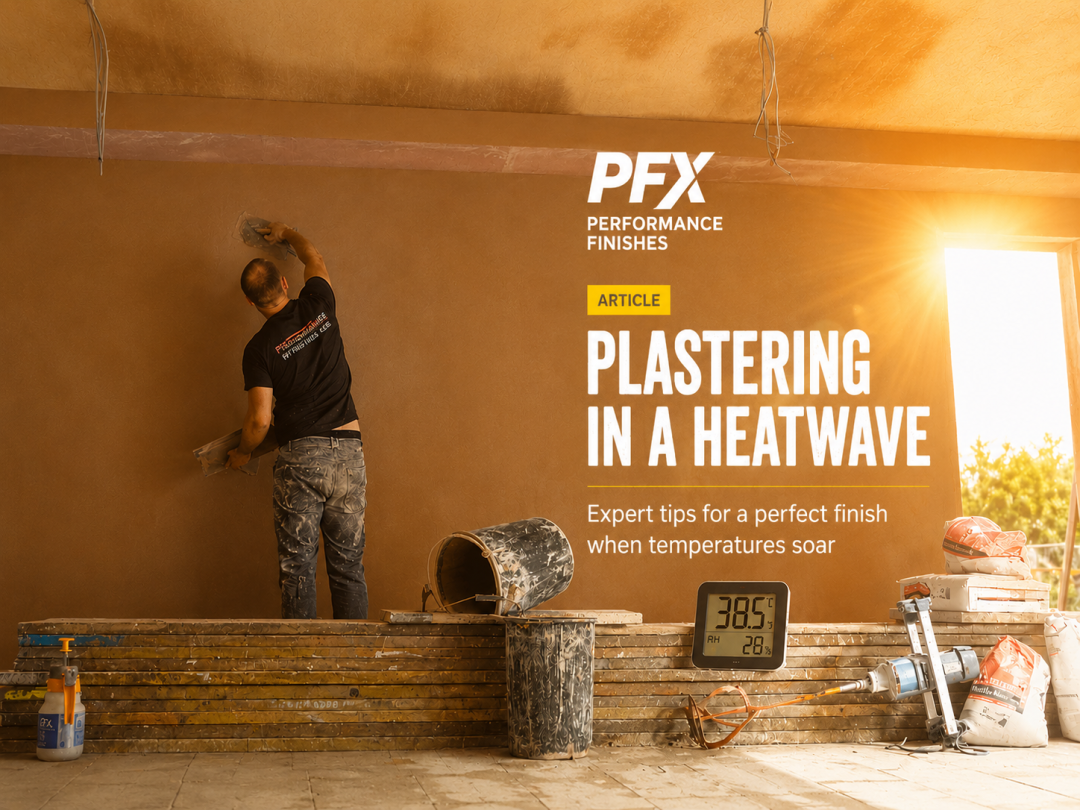
Heatwaves are becoming a more regular part of the UK working year, and for plasterers they bring a familiar problem: finishing plaster that tightens too quickly, drags under the trowel and leaves little room for error. The best approach is not to fight the material, but to adjust the job around the conditions.
In hot weather, the aim is simple: slow the set, control suction and reduce anything that dries the surface before the plaster has had time to behave properly. That may mean changing your start time, reducing the size of the gauge, closing windows, or in some cases deciding not to skim until conditions improve.
What readers will learn
- How heat affects finishing plaster on site
- Why drafts can be as much of a problem as temperature
- How to plan smaller, more controlled gauges
- When to avoid plastering during peak heat
- Practical safety considerations for working through hot weather
Understand what the heat is doing
Finishing plaster relies on a controlled set. In high temperatures, especially on warm backgrounds or in rooms with strong airflow, moisture can be pulled out of the material too quickly. That can shorten working time, make trowelling harder and increase the risk of tearing, flashing, dry edges and poor final texture.
The problem is often worse on reskims, high-suction backgrounds, rooms with sun-facing walls, conservatories, loft spaces and properties that have been closed up all day. If the wall feels warm to the touch before you start, treat it as a warning sign.
Close windows and control airflow
It can feel natural to open every window when the room is hot, but a draft across fresh skim can cause the surface to dry ahead of the set. That is when the plaster starts dragging, edges go off too fast and the finish becomes harder to bring back.
- Close windows and doors where practical to stop cross-drafts during application and early trowelling.
- Avoid fans blowing directly across fresh plaster.
- Watch for airflow from open stairwells, patio doors and through-rooms.
- Ventilate later, once the plaster has firmed up and the immediate risk of rapid surface drying has reduced.
In a heatwave, the room does not need to feel comfortable for the plasterer — it needs to be controlled for the plaster.
Reduce the size of the gauge
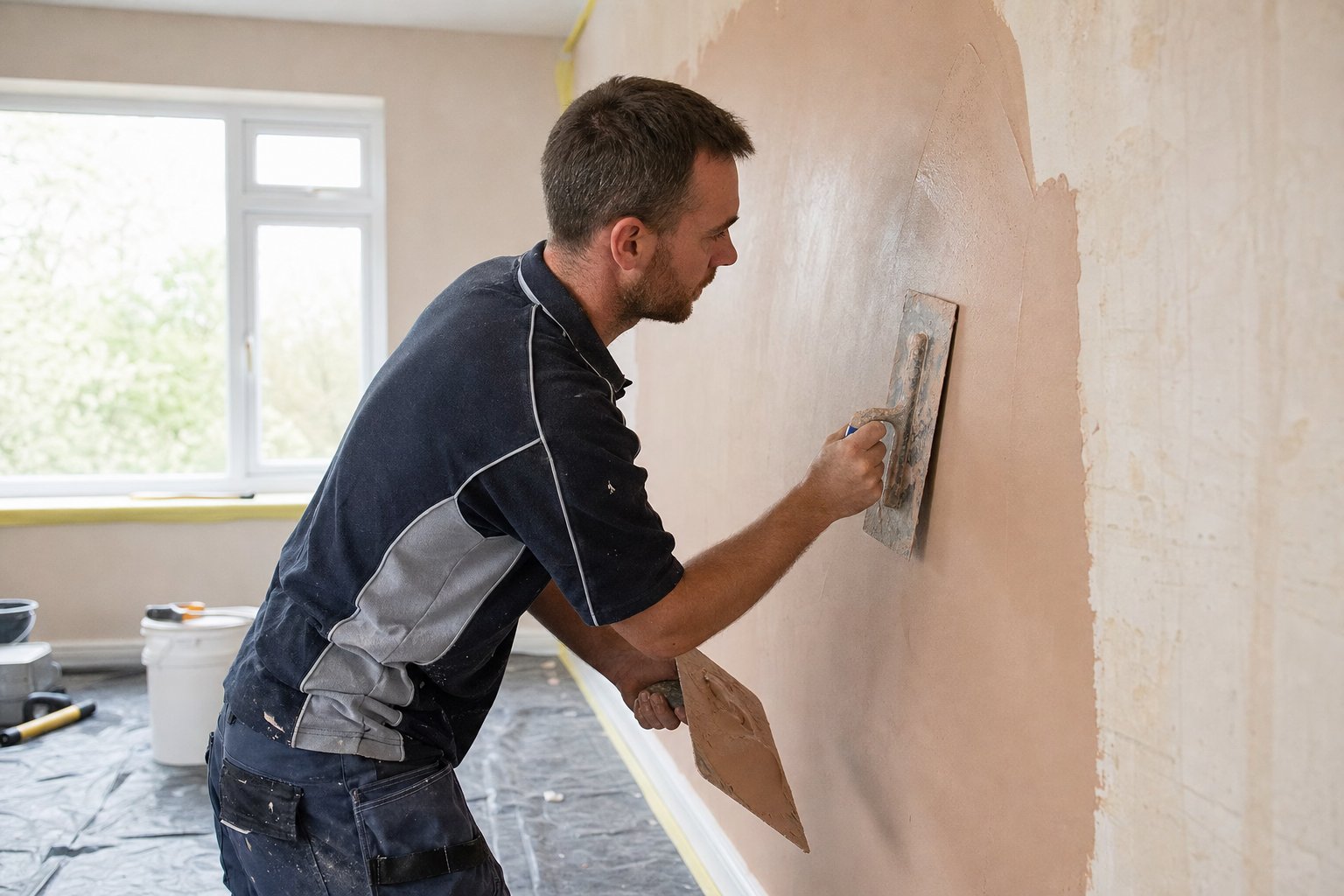
One of the most effective changes is to plaster smaller areas than normal. A gauge that feels manageable in March can become a race in July. Trying to keep the same pace in extreme heat often leads to rushed laying-on, missed edges and overworked finishes.
- Break large ceilings and walls into realistic sections where possible.
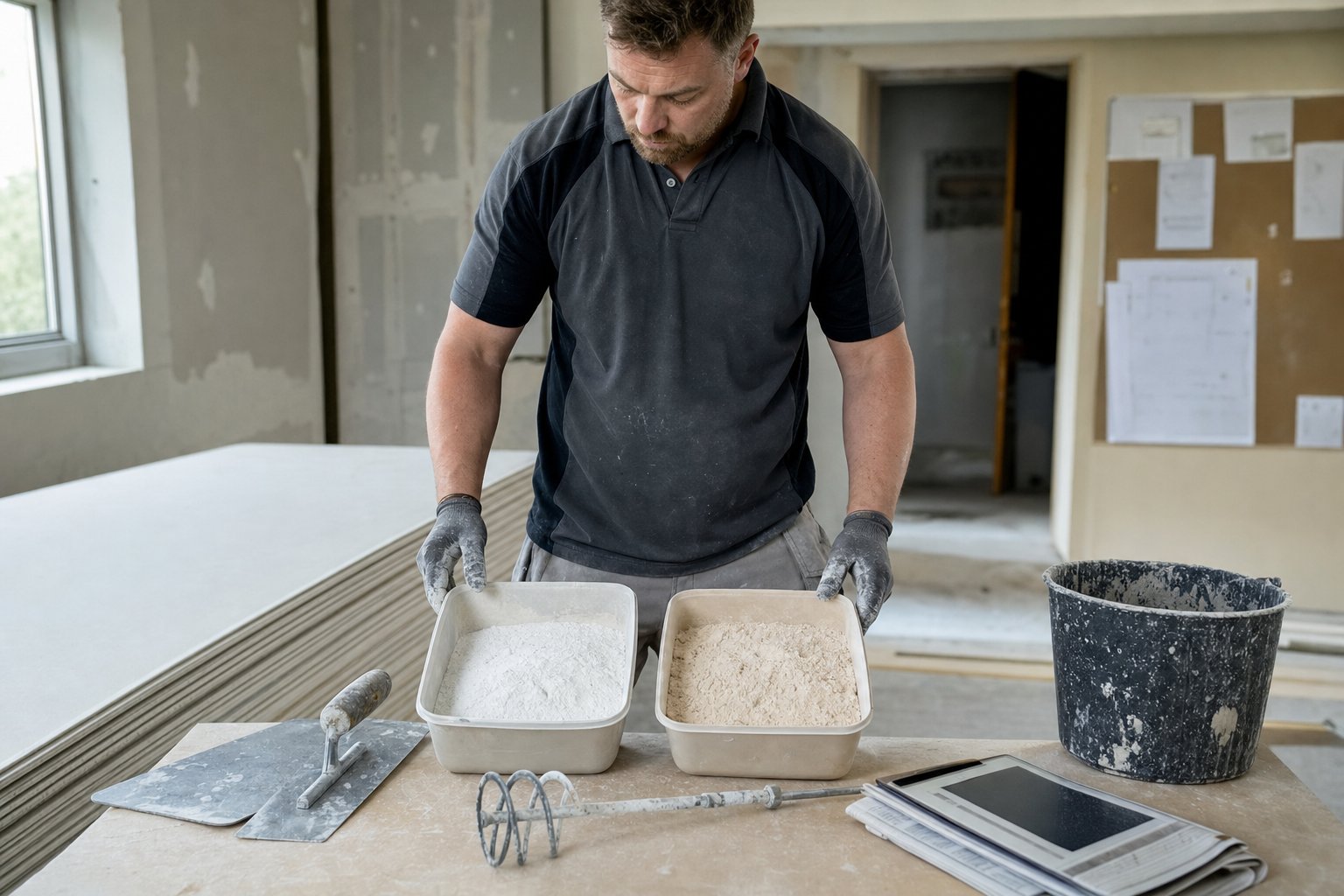
- Mix smaller batches so the plaster is not sitting in the bucket tightening while you are still laying on.
- Keep leading edges neat and plan stopping points before you start.
- Allow more time for checking angles, reveals and beads, rather than relying on a big final rescue trowel.
- Do not chase a full room if the conditions are already against you.
Avoid peak heat where possible
On the hottest days, timing is as important as technique. Early starts can make a real difference, particularly on rooms that catch the afternoon sun. If a client wants a loft room, extension or conservatory skimmed at the hottest part of the day, it is worth having a direct conversation about quality and risk.
- Aim to skim earlier in the morning where access allows.
- Avoid south-facing rooms during peak afternoon heat if they have been baking all day.
- Reschedule non-urgent finishing work if room temperatures are excessive.
- Prioritise preparation, boarding, beading or patching during the hottest hours, then skim when conditions are better.
- Make sure the client understands that delaying can protect the finish, not slow the job unnecessarily.
Control suction before you lay on
Background preparation matters even more in hot weather. High suction can rob moisture from finishing plaster quickly, and heat will exaggerate the issue. Follow the manufacturer’s guidance for the plaster and any bonding agents being used, and allow primers or PVA to behave correctly before skimming.
- Check suction properly rather than assuming the background will be fine.
- Use suitable preparation for the substrate, especially on older reskims and patchy backgrounds.
- Do not skim over a background that is dusty, hot, bone dry and highly absorbent without dealing with it first.
- Keep materials out of direct sunlight and avoid mixing with warm water from hoses or containers left in the sun.
- Use clean buckets and tools so the set is not accelerated by contamination.
Do not over-wet the finish to compensate
When plaster starts pulling in fast, the temptation is to keep throwing water at it. Used carefully, water is part of normal finishing, but excessive wetting can weaken the surface, cause fat to build up and leave a poor finish for decorating. The better answer is usually to reduce the area, control the background and manage airflow.
Heatwave site safety
Heat stress is a genuine site risk. Plastering is physical work, and carrying boards, mixing, loading out and trowelling in hot rooms can quickly take its toll. A good finish is not worth someone becoming ill.
- Drink water regularly and do not wait until you feel thirsty.
- Take short, planned breaks away from direct sun and hot rooms.
- Watch for dizziness, headache, confusion, cramps or excessive fatigue.
- Be cautious in lofts, roof spaces, small bathrooms and poorly ventilated areas.
- Use sun protection when loading out or working externally between tasks.
- Agree realistic expectations with clients, main contractors and other trades.
When the best decision is not to plaster
There are days when the professional choice is to pause, resequence or rebook. If the room is excessively hot, the background is warm and high suction, and there is no way to control airflow or timing, the risk of a substandard finish rises sharply. Experienced plasterers know that walking away from bad conditions can be better than spending twice as long trying to rescue a finish that should never have been started.
How do you adapt your gauges and timings during a heatwave? Share your site-tested tips with the PFX Academy community and let other plasterers know what has worked for you.