Introduction
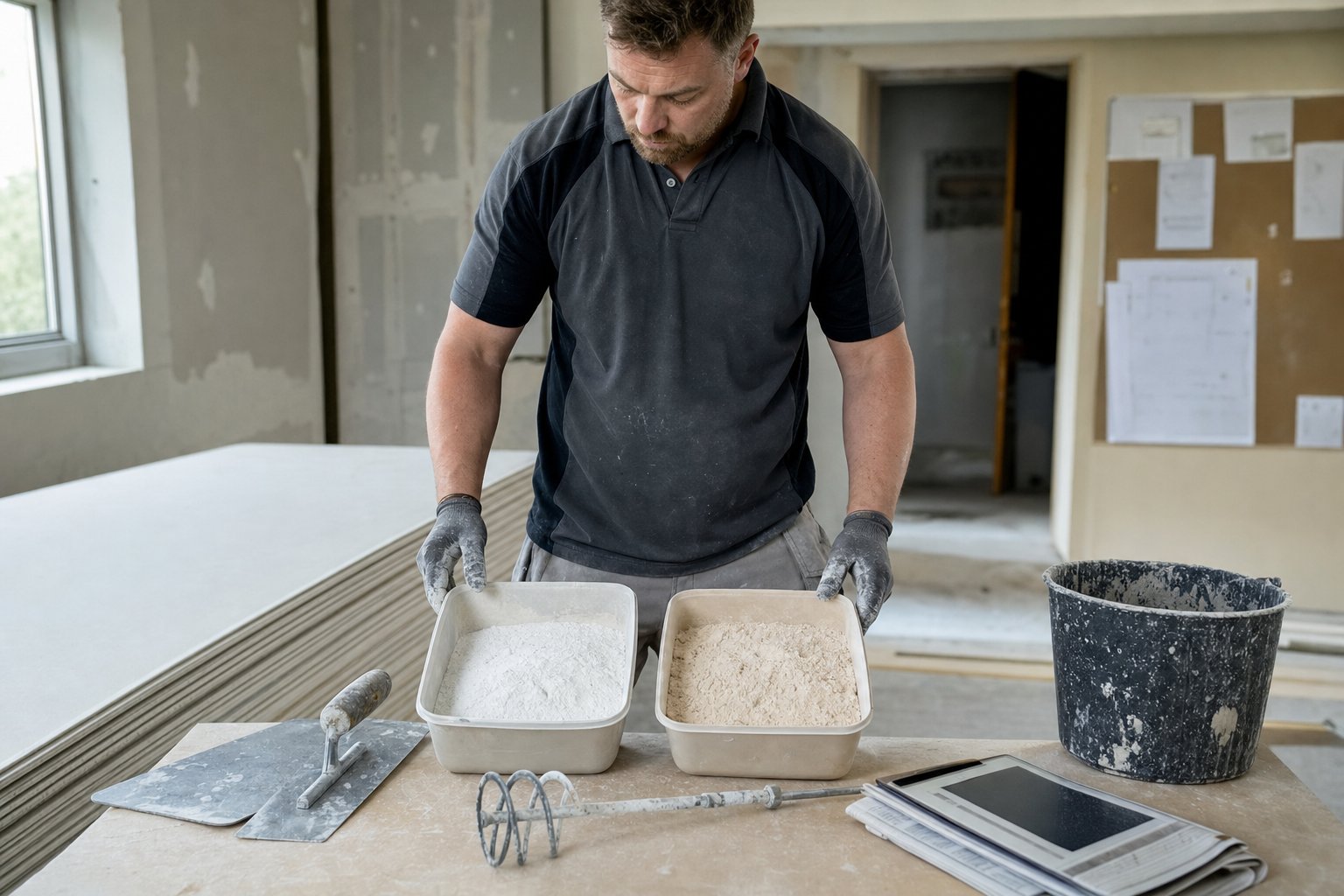
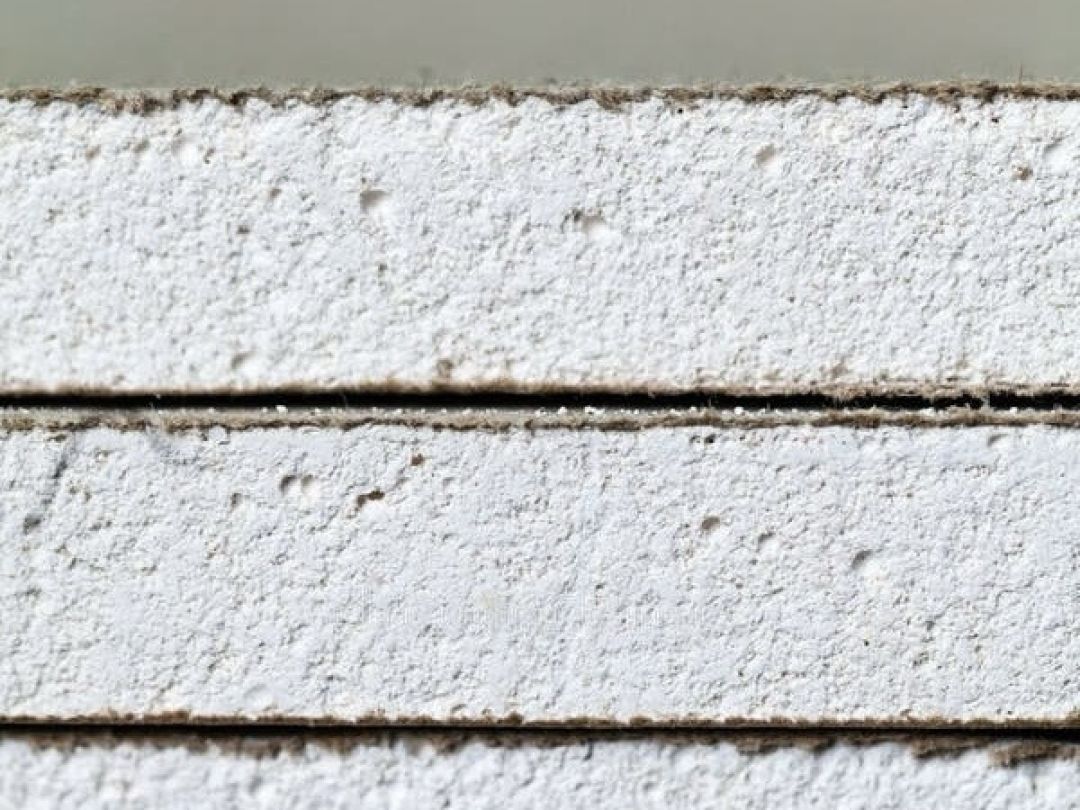
If you cut plasterboard regularly, you will have noticed that the core is not always the same colour. Some boards look white, others cream, pinkish, grey or slightly off-white. On site, this can lead to plenty of talk about what the board is made from and whether one colour means a better product.
The important point for plasterers, dryliners and site teams is simple: core colour on its own is not a reliable indication of quality, strength, origin or performance. Plasterboard is made to meet strict product standards, and the performance of the board depends on its tested specification, not the shade of the gypsum core.
What is the plasterboard core?
The core of plasterboard is primarily made from gypsum. Gypsum is a naturally occurring mineral, but it can also be produced synthetically or recovered through recycling. In board manufacture, gypsum is processed, mixed with water and other ingredients, formed between paper liners or facings, then dried to create a stable sheet material.
Depending on the board type, manufacturers may adjust the formulation with additives to support properties such as moisture resistance, fire performance, density, strength, acoustic performance or handling characteristics. Those formulations vary between products and factories, and they can change over time as manufacturing methods and raw material supplies change.
Types of gypsum used in plasterboard
There are three main gypsum sources commonly discussed in relation to plasterboard: natural gypsum, synthetic gypsum and recycled gypsum.
- Natural gypsum is mined or quarried from geological deposits. Its appearance can vary depending on the minerals and impurities present in the deposit.
- Synthetic gypsum includes DSG, or Desulphogypsum, also known as FGD gypsum. It is produced during the flue gas desulphurisation process at coal-fired power stations, where sulphur dioxide is removed from flue gases.
- Recycled gypsum is recovered from plasterboard waste, off-cuts or suitable construction and manufacturing waste streams, then processed so it can be reused in new board production.
DSG or FGD gypsum is chemically almost identical to natural gypsum. It has been used for many years to manufacture high-quality plasterboard. The fact that gypsum is synthetic does not make it inferior. What matters is that the raw material is controlled, processed correctly and used in a board that meets the required performance standards.
Why are some plasterboard cores different colours?
Gypsum from different sources can naturally produce slightly different coloured cores. This is usually linked to mineral composition, purity and the small amounts of other materials present in the gypsum. A cleaner or purer gypsum source may appear lighter, while another source may create a warmer, creamier or greyer-looking core.
Manufacturing also plays a part. Different factories may use different gypsum sources, formulations, additives, paper liners, drying conditions and production processes. This means two boards made for similar applications can have cores that look different, even though both may fully meet their required specification.
There is no universal industry rule that a white core is made from DSG or recycled gypsum. Equally, there is no rule that a pink, cream or grey core is always made from natural gypsum. Some manufacturers or individual factories may observe colour differences based on their own raw material source at a particular time, but this is not a published industry standard and should not be treated as one.
Does core colour affect quality?
No. The colour of the plasterboard core should never be used as an indication of quality or performance. A board should be judged by its declared type, manufacturer’s data, performance classification, certification and suitability for the job.
- Check the board markings and delivery paperwork, not just the core colour.
- Use the correct board type for the specification, such as standard, fire, moisture, acoustic or high-density boards.
- Follow the manufacturer’s installation guidance for fixing centres, jointing systems, board orientation and environmental conditions.
- Do not mix assumptions about colour with compliance. If in doubt, check the datasheet or speak to the manufacturer or supplier.
Safety note: when cutting or trimming plasterboard, control dust properly. Use suitable extraction where possible, cut in well-ventilated areas, wear appropriate PPE and follow site dust-control procedures. Core colour does not change the need for sensible dust management.
Sustainability and recycled gypsum
The closure of coal-fired power stations in the UK has reduced the supply of DSG or FGD gypsum. As a result, the plasterboard industry has placed greater focus on alternative raw material sources, including natural gypsum and recycled gypsum.
Recycling plasterboard waste helps reduce landfill, supports circular construction and can lower demand for newly extracted raw material. Some modern plasterboards are now designed around this approach. For example, British Gypsum’s Gyproc SoundBloc Infinaé 100 uses 100% recycled gypsum in the core as part of wider sustainability initiatives.
As with any manufacturer-specific product, formulations and raw material sources can change over time. Always refer to the current product datasheet, declaration of performance and manufacturer guidance when making specification or compliance decisions.
Key Takeaways
- The plasterboard core is primarily made from gypsum.
- Gypsum can be natural, synthetic or recycled.
- DSG, also called FGD gypsum, is synthetic gypsum produced during flue gas desulphurisation at coal-fired power stations.
- Synthetic gypsum is chemically almost identical to natural gypsum and has long been used in high-quality plasterboard.
- Core colour can vary because of gypsum source, mineral content, purity, additives and factory processes.
- There is no universal rule linking white, cream, pink or grey cores to a specific gypsum source.
- Core colour should not be used to judge board quality or performance.
- Use board markings, datasheets and manufacturer guidance to confirm suitability on site.
Have you noticed different plasterboard core colours on site? Share what you have seen, and let the PFX+ Academy community know what questions come up most often with apprentices, clients or site managers.